



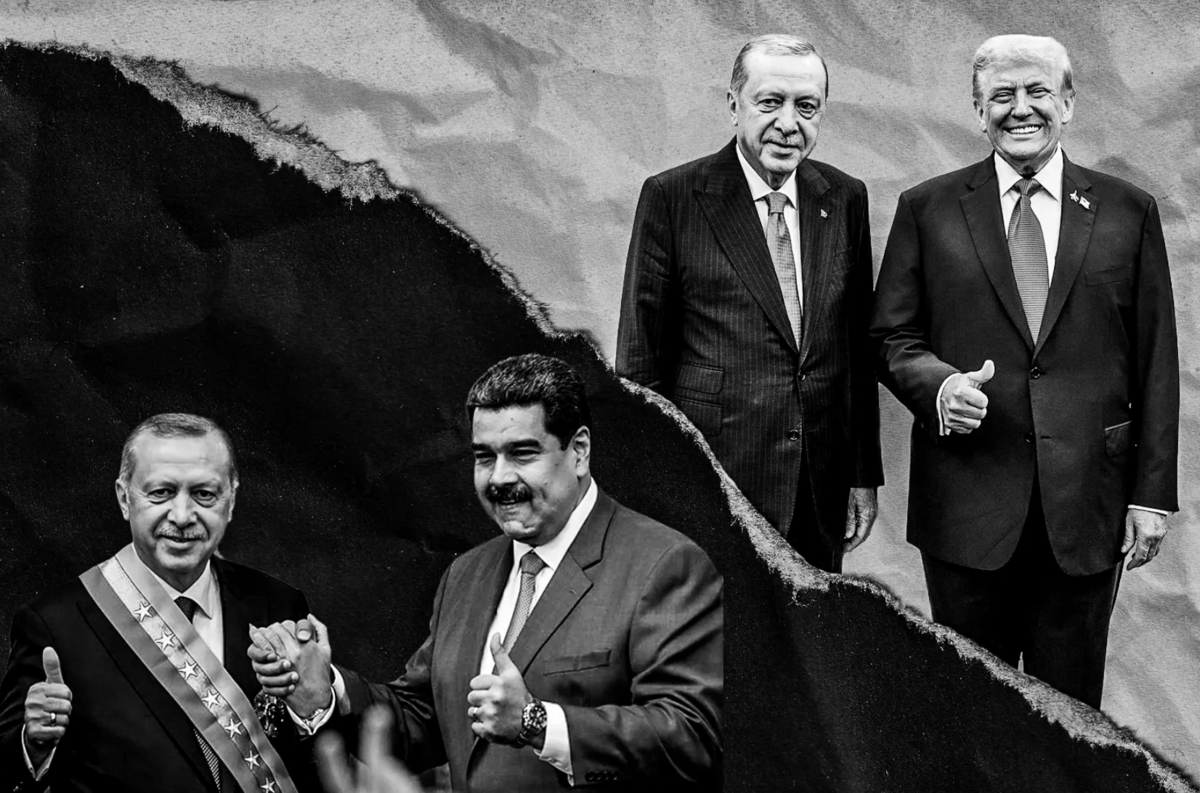
Turkish President Recep Tayyip Erdogan finds himself navigating a treacherous diplomatic terrain following the unprecedented US military operation that removed Venezuelan President Nicolás Maduro from power on January 3-4, 2026. Erdogan's response has been characteristically measured—a phone call to Donald Trump expressing concern about Venezuela's stability, combined with carefully worded statements opposing violations of international law and sovereignty. This cautious balancing act reveals the complex pressures constraining Turkey's foreign policy in an increasingly multipolar world where Ankara's traditional anti-imperialist rhetoric collides with its pragmatic need to maintain workable relations with Washington.
Erdogan's weekend silence following Maduro's forcible removal sparked immediate criticism from Turkey's opposition. CHP leader Özgür Özel accused Erdogan of fearing Trump and deliberately avoiding comment to prevent angering the US president. This criticism stung precisely because it highlighted a genuine dilemma: Erdogan has cultivated a close working relationship with Trump during his second term, contrasting sharply with the strained Turkey-US relations under Joe Biden. The Turkish government initially issued only a brief foreign ministry statement supporting Venezuela's stability efforts, while Erdogan avoided the issue during several public appearances.
By Monday, Erdogan was forced to address the crisis more directly during a cabinet meeting, describing the abduction as "saddening" and declaring that Turkey "does not condone any action that violates international law". He emphasized to Trump during their phone conversation that "Venezuela must not be driven into instability," framing Turkey's position around principles of sovereignty and international law rather than direct condemnation of US military action. This rhetorical formulation allowed Erdogan to signal displeasure without directly antagonizing Trump—a diplomatic tightrope walk that satisfied neither his domestic critics nor Venezuela's acting government.
Agrandissement : Illustration 1
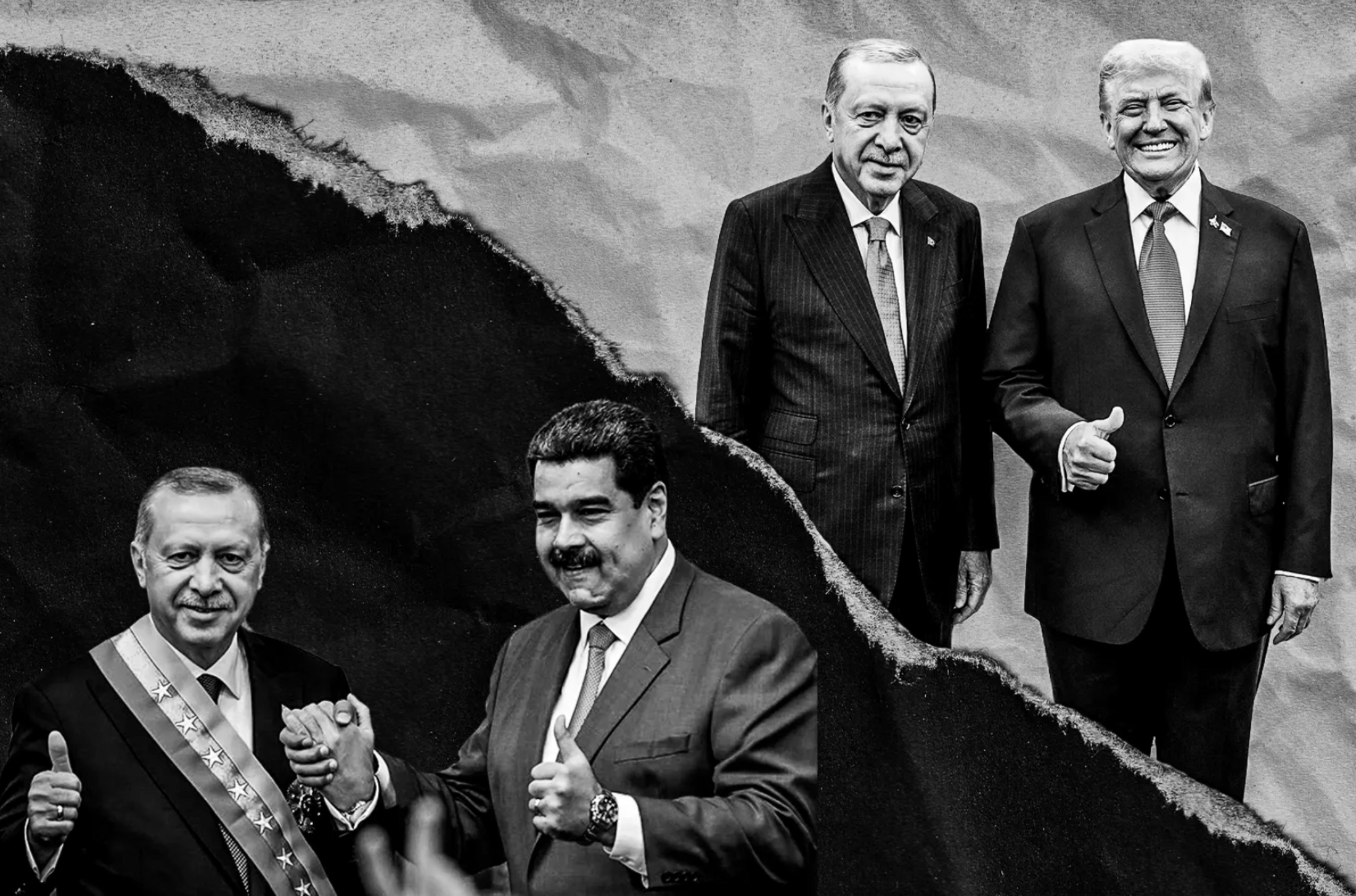
Erdogan's options for meaningful action are severely constrained by geopolitical realities and Turkey's domestic vulnerabilities. Turkey maintains robust relations with Venezuela dating to 2016, when Maduro offered early support following Turkey's failed coup attempt. Erdogan has visited Caracas and consistently backed Maduro against Western pressure. Reports confirmed by US Senator Lindsey Graham indicate that Washington offered Maduro exile in Turkey in November 2025—an offer Maduro apparently declined before the military operation proceeded.
More critically, Turkey depends on maintaining functional relations with Washington on issues far more vital to its national interests—Syria, F-35 fighter jet program readmission, and co-management of Kurdish armed groups along Turkey's borders.
Any substantive Turkish action beyond rhetorical criticism—such as offering actual refuge to Venezuelan officials, imposing sanctions on the US, or mobilizing international coalitions—would jeopardize these gains and invite American retaliation on issues where Turkey is genuinely vulnerable. Turkey was expelled from the F-35 program in 2019 over its S-400 purchase, and Erdogan recently expressed optimism about potential readmission. Sacrificing that prospect for symbolic solidarity with Venezuela makes little strategic sense.
Turkey’s relationship with Venezuela extends also well beyond rhetorical solidarity, rooted primarily in the lucrative gold trade that helped Caracas circumvent international sanctions. Since 2018, Turkish entities have partnered with Venezuela in state-run mining ventures in the Orinoco Mining Arc, with Turkey importing approximately $900 million in Venezuelan gold in 2018 alone. This gold was ostensibly refined in Turkey and returned to Venezuela, though records show no evidence of re-exportation.
This economic relationship served dual purposes: Venezuela gained access to hard currency while evading U.S. sanctions, and Turkey secured valuable resource flows during periods of economic turbulence. Turkish Airlines operated weekly flights between Ankara, Caracas, and Havana, facilitating gold transport and deepening commercial ties. The Trump administration’s takeover of Venezuela’s economy and stated intention to allow U.S. oil companies to “go in, spend billions of dollars, fix the badly broken infrastructure” effectively terminate this sanctions-busting arrangement.
The collapse of the Venezuela relationship, therefore, represents a significant economic setback for Turkey, eliminating a crucial revenue stream at a time when Ankara faces persistent economic challenges.
Moreover, Turkey’s involvement in the Venezuelan gold trade drew international scrutiny and accusations of enabling illicit mining networks plagued by human rights abuses. The end of the Maduro regime may potentially expose Turkish entities to retrospective accountability.
This situation also echoes past controversies over Turkey’s role in sanctions-evasion schemes involving gold and energy transactions — most prominently the Halkbank case. In that long-running U.S. prosecution, Turkish state-owned Halkbank was accused of helping Iran evade U.S. sanctions by converting restricted oil revenues into gold and cash through front companies and then moving those funds across borders, with portions passing through the U.S. financial system. Prosecutors have argued that this “gold-for-oil/gas” mechanism not only facilitated sanctions-busting for Iran but also artificially boosted Turkey’s economic indicators and export figures, raising broader concerns about Ankara’s willingness to engage in opaque commodity-based deals to circumvent international restrictions.
Erdoğan’s options for responding to Trump’s Venezuela move are also limited by Turkey’s dual identity as a NATO member seeking strategic autonomy. Turkey cannot openly defy the U.S., not only because of the dormant Halkbank case but also due to the risk of jeopardizing critical defense negotiations, particularly Ankara’s efforts to rejoin the F-35 fighter jet program and secure favorable terms for F-16 purchases.
The Venezuela crisis exposes uncomfortable contradictions, too, in Erdogan's domestic positioning. He has intensified his authoritarian crackdown against the opposition CHP, with Istanbul mayor Ekrem İmamoğlu arrested in March 2025 on what many view as politically motivated charges. Facingpotential electoral challenges, he is intent to use nationalist foreign policy rhetoric to consolidate his base.
But his muted response to Venezuela undermines his carefully cultivated image as a champion of anti-imperialism and defender of sovereignty—principles that resonate with his core supporters and distinguish his foreign policy brand.
Internationally, Turkey positions itself as a leader among countries defending "justice, legitimacy, and international law," as Erdogan stated in his cabinet remarks. Yet the Venezuela episode reveals the limits of this positioning when it conflicts with Turkey's strategic dependence on the United States. His inability to move beyond verbal criticism highlights Turkey's subordinate position within the Western alliance structure, despite Ankara's aspirations for strategic autonomy.
The episode reinforces Turkey's strategic ambiguity in the emerging multipolar order—attempting to maximize autonomy while remaining embedded in Western security structures. For Erdogan personally, the Venezuela crisis compounds domestic political pressures as he faces a resurgent opposition and economic challenges heading toward potential presidential elections. His relationship with Trump, which appeared to offer diplomatic dividends on Syria and regional issues, now carries reputational costs when Trump's actions clash with Turkey's stated principles and historical friendships.
Ultimately, the Venezuela episode demonstrates that Turkey's "strategic autonomy" remains bounded by hard power realities. Erdogan can articulate alternative visions of international order and cultivate relationships beyond the West, but when Washington acts decisively in its perceived sphere of influence, Ankara's options narrow to diplomatic protest and damage control.