



Agrandissement : Illustration 1
Agrandissement : Illustration 2
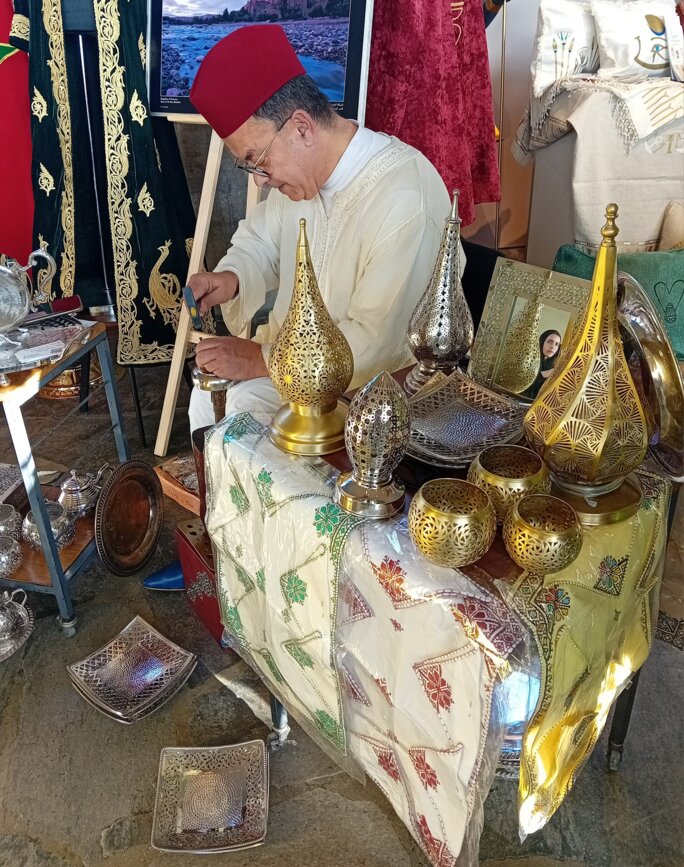
Agrandissement : Illustration 3
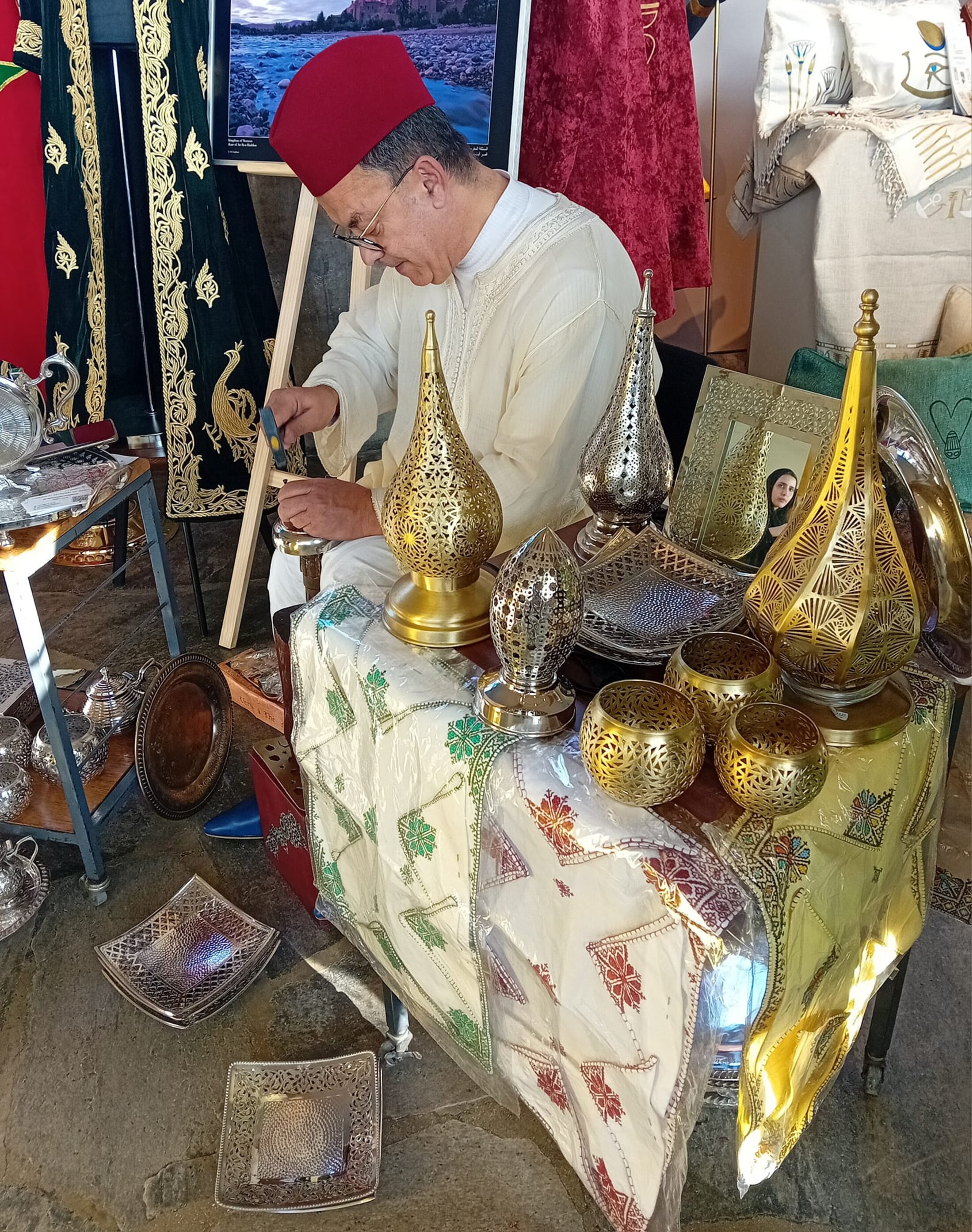
«Arab Cultural Week in Paris at UNESCO, November 4 and 5, 2024 : The Power of Arab Culture, Literature and Poetry» par Amadou Bal BA
It is thanks to Lise-Marie RANNER-LUXIN, editor-in-chief of Divas, Afropolitain magazine in Paris, that I reconnected with the cultural days of UNESCO, an institution that I no longer frequented since the departure of its Director General, Amadou-Mahtar M’BOW (See my article, Médiapart, September 24, 2024).
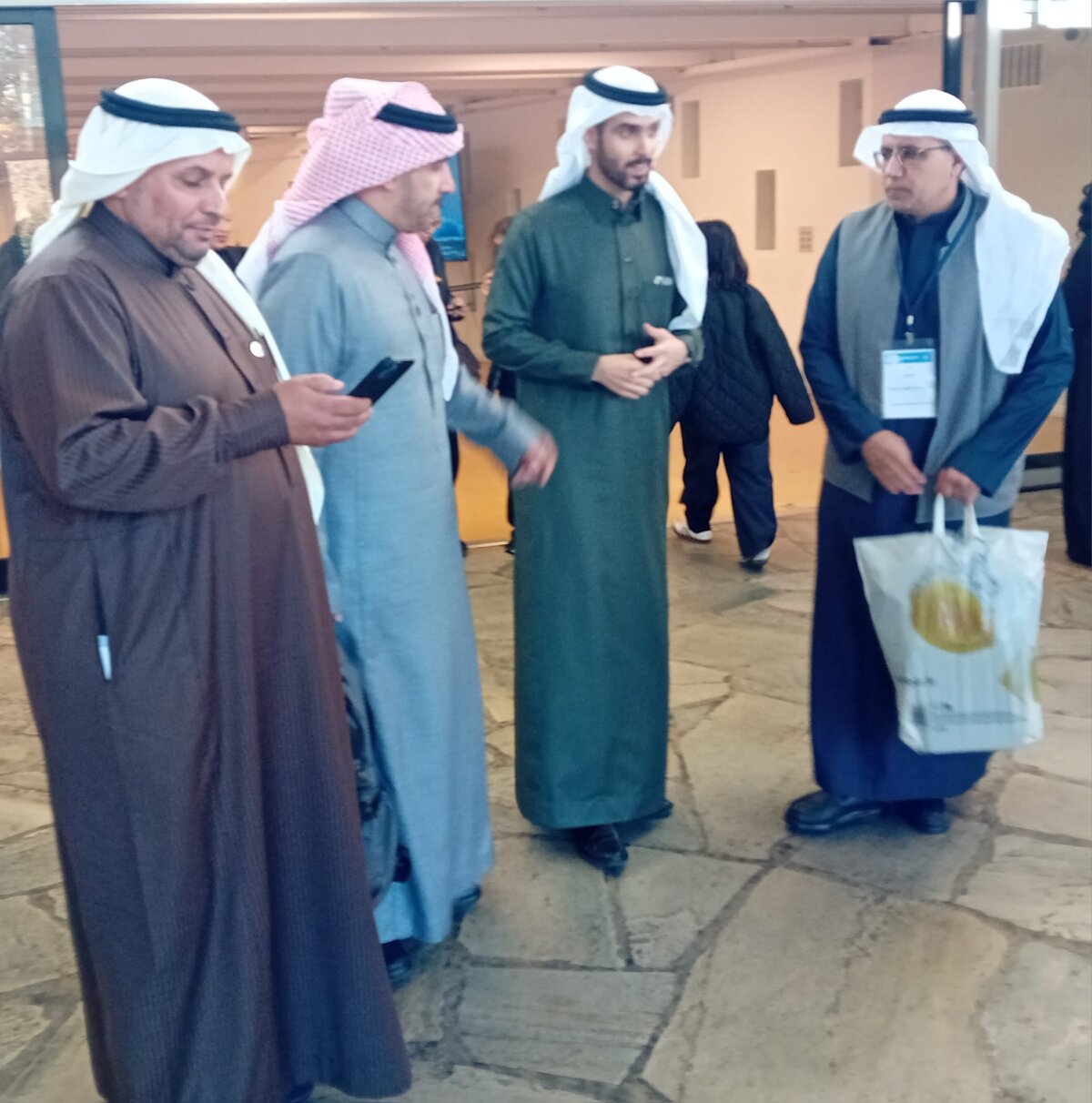
In the West, as soon as you enter a public place or space, it is particularly risky to say “Allahu Akbar!” or “God is Great”. However, despite the fact that the Arabic language is blurred in its true and good image, the Arab cultural week, at UNESCO, on November 4 and 5, 2024 in Paris, exchanges of high quality, of very high quality, were centered on cultural and artistic questions, far from certain political manipulations. Also, this Arab cultural week provided proof that the Koran is not just chanted litanies, it is a poetic literary Arabic sung, recited and particularly moving. Indeed, the power of Arab culture, literature and poetry comes from the depths of ages, millennia. The Arabs invented writing. Indeed, 3200 years BC. BC, the Sumerians, in Mesopotamia, between present-day Iraq and Syria, developed a semiology, a science of signs, a semantics, a science of the meanings of signs, a cuneiform writing. Nobody had done it before. One of these approaches consisted of associating different signs together, to make them approved, unified components.
Writing appears as a system. King from 1792 to 1750 BC. BC, Hammurabi wrote the first Code of political and social organization of his country, a written table of laws. The Arabs, nomads, Bedouins, with a culture of orality, adapted Sumerian writing. But each country has preserved its dialects. “At the beginning of time,” reports a very old legend, “God, to populate the globe, created at once several men to whom he distributed the various perfections: he gave the beauty of the head to the Greek, the skill of the hands to the Chinese, the superiority of the language to the Arab. This has retained its privilege throughout the centuries. From the first manifestations of civilization in the Asian peninsula from which the great movement began which spread from the 7th century to the north and center of Africa, to the center of Asia and to the south of Europe, the word, first oral, then written, exercised its power on the development of morals, minds, institutions including the Arab race,” wrote Louis SIMOND in 1920. During the Abbasid era, developing the techniques of the Sumerians, Ibn MAKLA, a poet, calligrapher and architect (Algorithm), provided the Arabs with writing. The Arabs are at the base of major discoveries, such as the invention of paper, the telescope, the glider, the use of numbers also called “Arabic numerals”, preventive medicine, surgery, etc.
Marcel PROUST (1871-1922) confessed that his literary passion came to him from the tales of “A Thousand and One Nights”, a book given to him by his grandmother. Haroun AL-RACHID (766-809), caliph of Baghdad, a contemporary of Charlemagne, was a commander of arts and letters who had spread Arabic literature as far as France. Among all the caliphs of the Middle Ages, Harun AL-RACHID, the fifth of the Abbasid dynasty, is probably the most famous: he owes his glory to the collection of tales from the Thousand and One Nights, the work of Arabic literature undoubtedly the best known in the West, in which he appears as the prototype of the just, good and pious caliph, pious, just and good, Harun AL-RACHID would embody a reign of equity and harmony. His name is also associated with a form of golden age of the Islamic Empire, marked in particular by economic prosperity and unprecedented cultural expansion.
I - UNESCO, preserving the Arabic language and its cultural heritage
A – The Arabic Language and it’s Future
Language is the identity of a people, the basis of a culture, a vehicle of values; it must have the capacity to create, innovate and renew itself, to be at the service of development. Arabic does not only concern Arab countries, but also wherever the diaspora of these countries is present, particularly in terms of education, artificial intelligence, translation and complementarity of language policies.
A language to live must have speakers. Resilient and robust, Arabic is among the top 5 most spoken languages in the world, with 300 million speakers daily, according to statistics from the Modern Language Center at the University of Birmingham. The Arabic language is a work opportunity for companies dealing with the Arab world. Arab countries offer scholarships and research to promote their language. However, young people read little and the diaspora is reluctant to learn Arabic, due to the rise of populism and pessimism.
Arab countries are looking for innovative solutions to overcome this reluctance, drawing inspiration from the experiences of the United States, Japan, Taiwan, Australia, Finland, and France. No learning method should be ruled out, including taking into account disability. Thus the pessimist poet, Abul Al-MAARI (973-1057), Syrian poet and philosopher, like Taha HUSSEIN (1889-1973), Egyptian academic, novelist, essayist and literary critic, great Arab scholars, were nevertheless blind. El Hadji Mahmoud BA (1908-1978), originally from Diowol, in Mauritania, was at the base, in 1939, of the movement, Al-Falah or “Muslim Cultural and Social Movement”, its aim was to revive the teaching of the Sunnah or tradition in Arabic.
B – UNESCO: Preserving intangible heritage and historic sites
1 – Arabic Calligraphy, Intangible Heritage of Humanity
At the forefront of Arab cultural heritage is calligraphy, an intangible art. Arabic calligraphy refers to the artistic practice of transcribing handwritten Arabic writing fluidly, in order to express harmony, grace and beauty. Between art, culture and religion “Arabic calligraphy is the artistic practice of handwriting in Arabic in a fluid manner to convey harmony, grace and beauty. The fluidity of Arabic writing offers endless possibilities, even within a single word, as letters can be stretched and transformed in many ways to create different designs,” says UNESCO. Using the twenty-eight letters of the Arabic alphabet, written in cursive writing from right to left, Arabic calligraphy, a clear and readable writing, has undoubtedly become an art. Calligraphy, an age-old tradition in the Arab and Islamic world, entered the list of intangible cultural heritage established by UNESCO on December 14, 2021. Indeed, for this international organization, calligraphy, an intangible cultural heritage, remains, more than ever, “an important factor in maintaining cultural diversity in the face of increasing globalization”. The oldest was the Kufic writing, named after a city in Iraq, Kufa, which appeared at the end of the 8th century, before the appearance of “Naskhi” developed in the 9th century, a style of writing linked to the Koran. Initially, the Arabic language, like the Koran, was an oral, or recited, language.
In fact, calligraphy has invaded daily life, homes, mosques, currency, seals, palaces and has even spread to Andalusia, to Kairouan. Finally, having become an art, calligraphy integrated the streets, cultural spaces, but while preserving the aesthetics, also a means of spreading the Arabic language, in an advantageous way. Calligraphy, which has become art, is therefore undoubtedly the most precious asset of Arab countries, and is now part of their life.
Due to modern means, such as artificial intelligence, the need to communicate particularly in marketing, between the ancient and the modern, calligraphy has evolved, with a bright future.
2 – Sites to Protect and Healthy and Fair Food
In Arab countries, there is a historical heritage of capital importance for humanity. Also, UNESCO undertook, from 1955 to 1968, to renovate and protect the monuments of Nubia, in the south of Egypt, namely the temples of Abu Simbel, built at the time of Ramesses II in the 13th century BC, commemorating the victory of 1275 BC. BC on the Hittites in Kadesh and reminded Nubia of Egyptian domination. This rescue remains one of the largest operational actions carried out by UNESCO. Indeed, the construction of a new dam on the Nile, in Aswan, threatened the temples of Abu Simbel and other ancient treasures, carved into solid rock. The movement of monuments, major excavations were carried out throughout the Nubian region as the dam project was completed, allowed the excavation of a then unknown heritage of immense wealth, ranging from ancient objects dating from the Stone Age to a 19th century church decorated with wall paintings.
Few people know that part of the pyramids is also located in Sudan, the real name of ancient Nubia; “Bilad”, like “Sudan”, means “land of blacks”. The most famous monument in Sudan affected by the Aswan High Dam project was the temple complex on Philae Island. Dedicated to the goddess Isis, the sanctuary dates mainly from the Greco-Roman era and was later transformed into a church (540 AD). In Sudanese Nubia, the following monuments and sites were under threat: the temple of Ramses at Aksha, the fortified city of Buhen with two temples dating from the 18th dynasty of Egypt, and the two temples of the same era in the fortresses of East and West Semna. With the exception of three monuments (the temple of Gerf Husein, the chapels of Qasr Ibrim and the temple of Abu Oda), the buildings were dismantled, dismantled and moved to another site and grouped into six groups.
Since Morocco ratified, in 1981, the UNESCO convention of October 28, 1975, this country has 9 cultural properties and 6 natural properties listed as world heritage sites. These are essentially Medinas, or old neighborhoods (Fez, Marrakech, Tétouan, Essaouira, Meknes), but also mosques, caves, old granaries, ancient cities like Meknes, the Ksar of Ait Ben Haddou, El Jadida or the Portuguese city of the Portuguese City. The film, Indiana Jones, was filmed in Morocco.
Palestine, a country at war since 1948, whose cultural heritage is constantly threatened with disappearance, ratified the Convention for the Protection of the World Cultural and Natural Heritage on December 8, 2011. In 2024, Palestine has 5 properties listed as World Heritage, namely four in the West Bank: the Church of the Nativity as the birthplace of Jesus and the pilgrimage route associated with Bethlehem; the old city of Hebron; the land of olive trees and vineyards of Battir as a cultural landscape of southern Jerusalem; and Tell es-Sultan in the former West Bank.
Saudi Arabia, home to the holiest places of Islam, has 8 world heritage sites, 7 cultural and 1 natural: the archaeological site of Hegra or Al-Hijr / Madā ͐ in Ṣāliḥ (Medina), the cultural area of Ḥimā, the rock art of the Hail region, the district of at-Turaif in ad-Dir'iyah, the cultural landscape from the archaeological zone of Al-Faw, the oasis of Al-Ahsa, the historic city of Jeddah, Uruq Bani Ma’arid of Riyadh.
II– The Antiquity and Vigor of Arabic Literature and Poetry
For more than 13 centuries, Arabic literature and its poetry have radiated across the world. Poetry, a mirror of Arab thought, was also declaimed in the “Diwan”, a meeting place to discuss their public affairs. Also, from the beginning, Arabic poetry, combining the temporal and the spiritual, embraced all aspects of life, in its diversity, such as love, pain, pride, honor and pleasure. If Islam reinvigorated Arab culture with its conquests, the Arabs also had an important pre-Islamic literature. Therefore, two worlds coexist: the ancient and the modern. “Love poetry has occupied a very special place among the Arabs since ancient times. We could describe this particularity as sublime, because love poetry represents the first word both in poetic language and in the collective imagination. This poetry has several names in Arabic poetics, but the most common is that of Al-Ghazal. In the linguistic sense, “Ghazal” is the speech that young boys and girls exchange, or it means distraction with women. In the critical sense, the “Ghazal” is the poetic word which expresses the feeling of the poet in love with regard to the beauty of his beloved and his way of seeing her,” writes Mohammed BENNIS.
A - Classical Arabic Literature
Arabic literature has been dominated by great poets since Antiquity, therefore a pre-Islamic era. The oldest of them known, Imrou Al-QAYS (501-565), son of the last king of Kindah, expelled from the palace, is a wandering poet, enjoyment loving alcohol and seducer. Died at the home of Emperor Justinian, in conditions not yet elucidated, Imrou Al-QAYS sings of love and the sorrows of the heart. “The mature man from his blind youthful loves ends up mourning, but my heart from his crazy passion for you refuses to do its own. What a wonderful night that you appear in the stars, as if attached to the muffled rocks with linen ropes!”, he wrote.
The second great poet of the Umayyad era, Omar Ibn Abi RABIA (644-712), born in Mecca, from a Quraishite family, from the tribe of Mohammed, poet of courtly love. Seducer, he is a poet of gallantry, of shared pleasure “If love were to die one day, it would have died in me, but my darling, I swear to you, love does not die,” he writes. His poetry is entirely dedicated to the glory of the woman he celebrates; claiming for her the right to love freely, believing that society as a whole could benefit from feminine beauty and seduction “According to rumors, beauty bewitches me. What a charm is the spell cast upon me by her! I requested meetings in vain. Each time Hind laughs and says: the day after tomorrow!”, written for Hind Bint Al-Harith.
The third great poet, Abdou NAWAS (757-815), a mixed race (Arab father, Persian mother), libertine, drunkard and having lost his reason, is an irreverent juggler of words. Sold as a slave, Harun Al-Rashid recruited him to his court “The caliphate is lost. It’s the fault of the caliph, his ignorant vizier, the naive advisor. They deceived their master and both are at fault. The scandalous Caliph is an active pederast. To change their behavior, they would have to be able to. Al-Amîn’s darling is a eunuch! The misconduct of these two, meanwhile, has splashed everything, like a pissing camel,” he writes in “The Fall of the Body.” Avant-garde poet, Abu NAWAS, is a provocateur “Ibrâhim an-Nazzâm makes real blasphemous remarks to us. He surpasses me in atheism and his heresy is notorious. They say to him: “Where do you drink?” He replies: “In my glass!” ; When someone asks him: “Do you like it?”, he replies: “From behind!” ; “And what are you repudiating?” Answer: “Prayer!” ; “What do you profess?” He says: “All evil!”, he writes in “Blasphemy”. While handling satire, becoming a courtier, due to his proximity to the caliph, Harun Al-Rashid, Abu NAWAS ended up moderating his poetry.
The fourth great poet is Abou'ltayyib known as AL-MUTANABBI (915-965), proud court poet, great courtier, he sang his poetry about the great deeds and benefits of his protectors, but which he castigated, following various quarrels. His servile poetry is therefore a mixture of praise and satire, an eloquence marked by insolence and reverence, baseness and pride. A poet, of very modest circumstances, son of a simple water carrier in Kufa (Iraq), in his ambition and his thirst for recognition, he claimed to come from the aristocracy. Because of a verse about Muhammad, he became MUTANABI, “the Prophet.” Indeed, “I criticize the little people of this century, because the most learned of them is a moron, the most energetic a coward, the noblest a dog, the most clairvoyant a blind, the most vigilant a dormouse, and the most courageous a monkey,” he writes. A poet of wandering and combat, immodest, but talented, he is one of the great Arab classics “What heights cannot I reach? And what rigors should I fear? For the whole of Creation And everything that God did not create, counts less for my aspirations than a hair on my crowned forehead,” he writes.
There are many other great Arab classics, like Jalal Din AL-RUMI or Omar KHAYAMM.
B – Literature, Modern Arabic Poetry
It was undoubtedly Naguib MAHFOUZ (1911-2006), the first Nobel Prize winner in Arabic literature, who broke the ice. A realist and symbolist writer, his works have been translated into almost every language in the world. In his literary genius, Naguib MAHFOUZ combined literary Arabic and dialectal Arabic to create a rigorous and harmonious language, understood by all. Naguib MAHFOUZ remained attached to the history of his country, to power struggles, and to his hometown, Cairo, which he almost never left.
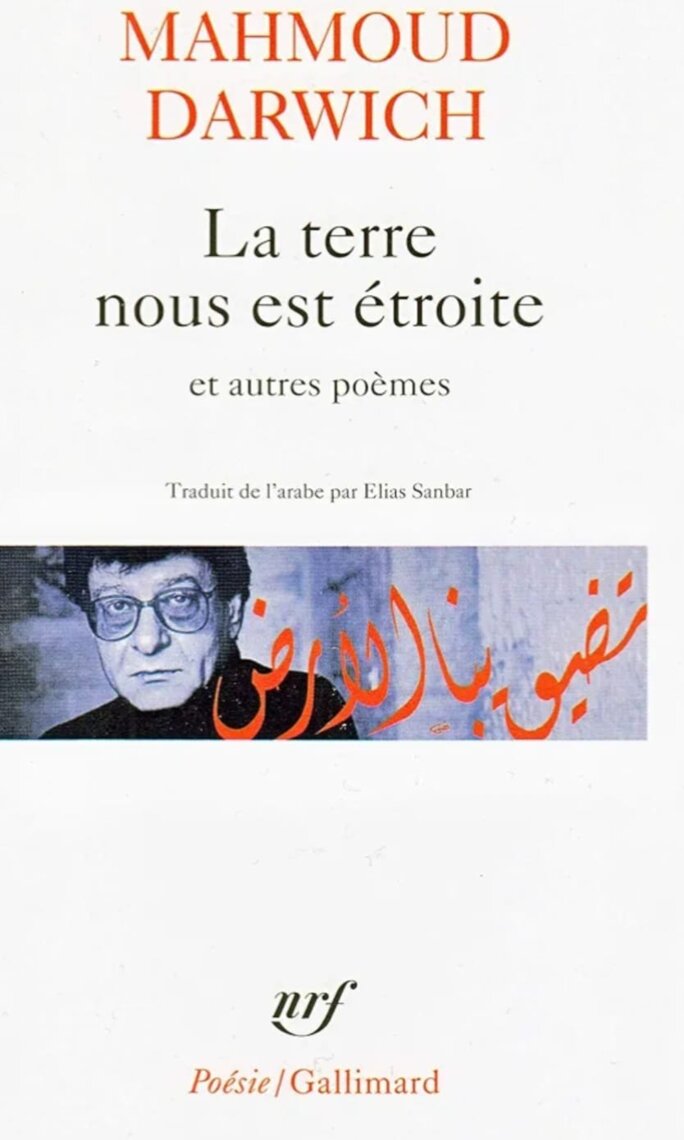
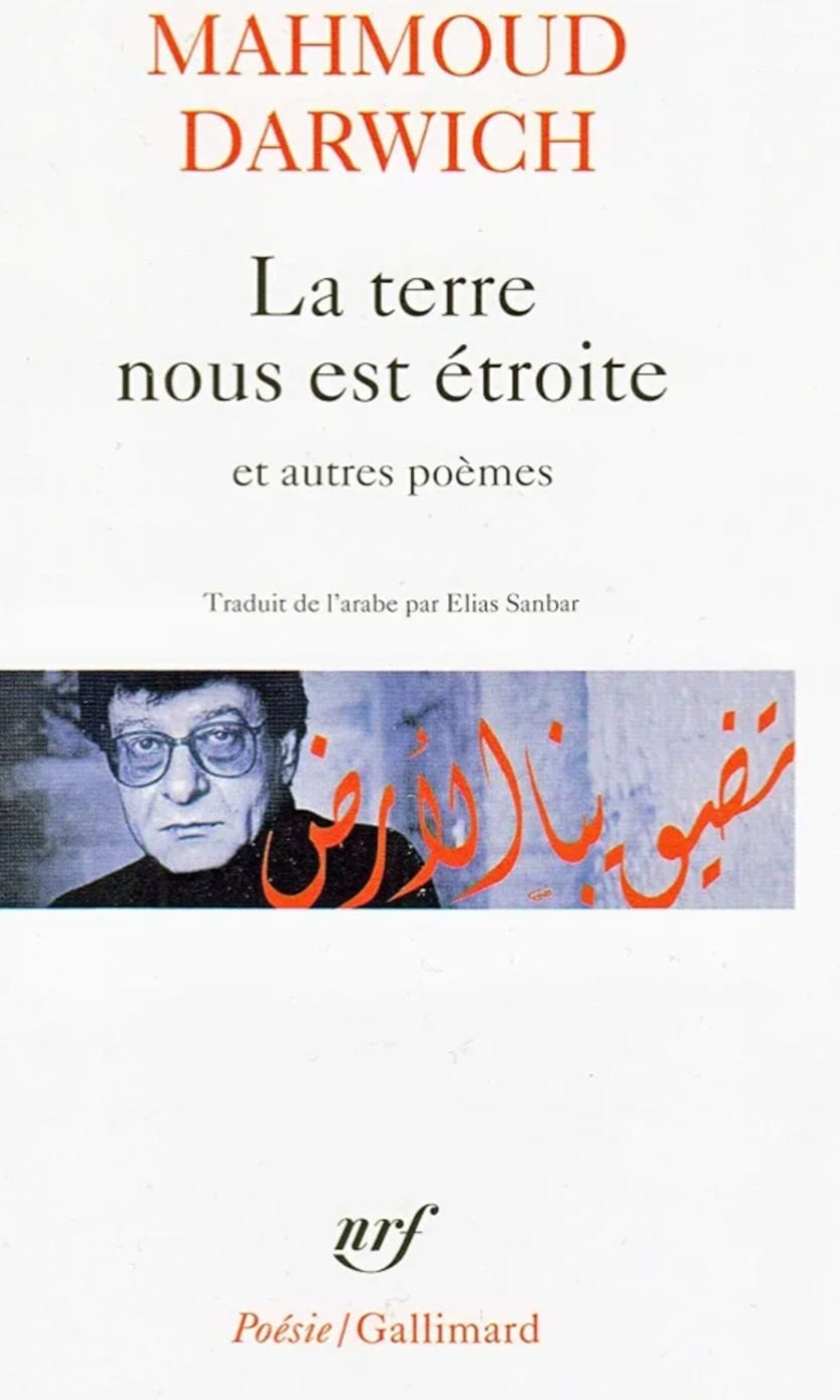
Mahmoud DARWICH's legacy has also left a strong mark on the minds of our time. A nationalist Palestinian poet of wandering, love, otherness and Peace, of the Nakba or catastrophe in 1948; his people having been thrown on the path of exile in 1948, Mahmoud DARWICH sang of Palestine, threatened by Donald TRUMP with ethnic cleansing. "I feel a certain pride in belonging to the country that gave birth to Jesus. If the world witnesses more than one new Golgotha every day, I note with pride that the first Golgotha took place in Palestine. Having this in mind sharpens my personal conscience, arms me with great moral strength, opens up a vast human horizon before me," says Mahmoud DARWICH.
Mahmoud DARWICH is deeply nationalist “Register! I am Arab. My card number: fifty thousand. Number of children: eight. I work in the quarry with my fellow sufferers. I am my first name “Patient infinitely”, in a country where everyone lives on the embers of anger. My roots. My grandfather was a peasant, a being without value, nor ancestry, my house, a guard’s hut. That you have snatched the vineyards of my fathers, and the land that I cultivated, me and my children, together. You have taken everything from us except, for the survival of my grandsons, the rocks that are here. I have no hatred for men, I attack no one, but if I am hungry, I eat the flesh of my usurper. Beware of my fury!” he writes in “Identity Card”. Poet of exile, he does not despair "Never were our exiles in vain, never in vain were we sent there. Their dead will die without contrition. It is up to the living to mourn the calm of the wind, to learn to open the windows, to see what the past does to their present and to mourn softly and softly that the adversary does not hear what is in them of broken pottery. Martyrs, you were right. The house is more beautiful than the path home. In spite of the betrayal of the flowers. But the windows do not open on the sky of the heart and exile is exile. Here and there. Never in vain were we exiled and our exiles have not passed in vain. And the earth is transmitted like the language", he writes "On the last evening on this earth".
REFERENCE
BA (Amadou, Bal), «Mahmoud Darwich, poète national palestinien», Médiapart, 25 novembre 2023 ;
BA (Amadou, Bal), «Naguib Mahfouz, écrivain égyptien réaliste, prix Nobel de littérature», Médiapart, 25 mars 2024 ;
BA (Amadou, Bal), «Taha Hussein et son «Livre des jours», Médiapart, 18 décembre 2022 ;
BA (Amadou, Bal), «Omar Khayyam», Médiapart, 24 août 2024 ;
BA (Amadou, Bal), «Jalal Din Al Rumi : poète mystique et sa religion d’amour», Médiapart, 5 avril 2024 ;
BA (Amadou, Bal), «Oum Khalsoum, une diva égyptienne», Médiapart, 3 septembre 2021 ;
BA (Amadou, Bal), «Le Soudan nilotique, sa riche histoire, sa tragédie. Quelle issue ?», Médiapart, 23 décembre 2024 ;
BASSET (René), La poésie arabe antéislamique, Paris, Ernest Leroux, 1880, 81 pages ;
BEN HABIB (Mohammed), La poésie d’Ibn El Arabi, traduction de R. Boucher, Paris, Ernest Leroux, 1872, 247 pages, texte en français et en arabe ;
BLACHERE (Régis), Élément de l’arabe classique, Paris, Maisonneuve-Larose, 1985, 174 pages ;
BLACHERE (Régis), Histoire de la littérature arabe à la fin du XVe siècle de J-C, Paris, Adrien-Maisonneuve, 1952-1966, 3 volumes, 865 pages ;
BLACHERE (Régis), Un poète arabe du IVe siècle de l’Hégire. Xe siècle J-C. Abou ṭ-Ṭayyib Al-Motanabbî. Essai d'histoire littéraire, Paris, Adrien Maisonneuve, 1935, 366 pages ;
BOUHEDDA (Fethi, Ouled), Ahmad Sawki (1868-1932), Paris, Centre de la culture du livre, Institut du Monde arabe, 2021, 128 pages ;
CASUS (Dominique), «L’errance d’Imru’l Qays : poésie arabe et poésie touarègue», Journalistes des Africanistes, 2002, Vol 72, n°2, pages 131-151 ;
CHAOUCHE (Fethi, Ouled), «La poétique du bestiaire dans la poésie antéislamique», Synergies. Monde arabe, 2008, n°5, pages 101-117 ;
CLOT (André), Haroun Al-Rachid commandeur des lettres, Paris, Fayard, 1986, 375 pages ;
CLOT (André), Haroun Al-Rachid et les temps des «Mille et une Nuits», Paris, Fayard, 1986, 375 pages ;
DARWICH (Mahmoud), Anthologie (1992-2005), poésie, traduction d’Elias Sanbar, Arles, Actes Sud, 2009, 320 pages ;
EL JANABI (Abdul, Kader), présentation de, Le poème arabe. Anthologie, Paris, Maisonneuve et Larose, 1999, 278 pages ;
GHAZZALI (Lahouari), Taha Husayn, Casablanca, Centre culturel du livre, 2021, 126 pages ;
GLASSNER (Jean-Jacques), Ecrire à Summer : l’invention du cunéiforme, Paris, Seuil, 304 pages ;
HAMORI (Andras), La littérature arabe médiévale, traduction d’Abdelsalam Cheddadi, Paris, Actes Sud, Sindbad, 2002, 216 pages ;
HOURANI (Albert), Histoire des peuples arabes, Paris, collection Points Seuil, 1993, 732 pages ;
HUART (Clément), «La poésie arabe antéislamique et le Coran», Académie des Belles Lettres, 1904, 48e année, n°2, pages 240-242 ;
HUART (Clément), Littérature arabe, Paris, Armand Colin, 1902, 470 pages ;
KAHN (Armand), La littérature arabe, préface de Charles Simond sur la civilisation arabe, Paris, Louis Michaud, 1920, 224 pages ;
KHAWAM (René), La poésie arabe. Des origines à nos jours, Paris, Marabout, 1967, 256 pages et Paris, Seghers, 1975, 342 pages ;
KHEIR BIEIL (Kamal), Le mouvement moderniste de la poésie arabe contemporaine, Paris, Publications Orientales de France, Paris, Publications orientalistes de France, 1978, 487 pages ;
MAC GUCKIN De SLANE, traduction et préface de, Le Diwan de d’Amro’klais, Paris, Imprimerie royale, 1837, 75 pages, texte en français et en arabe ;
MERGANABE (Patrick) VUONG (Hoa, Hoï) traducteurs, Mutanabbi : le livre des sabres, choix de poèmes, Arles, Actes Sud, Sindbad, 2012, 272 pages, édition bilingue ;
MERZOUG (Omar), «Abu Nawas, le poète et l’homosexuel», Tumultes, 2013, n°41, pages 35-48 ;
MONTEIL (Vincent, Mansour), Abû-Nuwâs. Le vin, le vent, la vie, Arles, Actes Sud, Sindbad, 1998, 200 pages ;
NAWAS (Abu), Le vin, le vent, la vie, choix de poèmes, Vincent-Mansour Monteil, Arles, Actes Sud, Sindbad, 1979, 190 pages ;
PERES (Henri), La littérature arabe et l’Islam par les textes : les XIXe et XXe siècles, Paris, Librairie d’Amérique et d’Orient, Adrien Maisonneuve, 1977, 273 pages ;
PERES (Henri), La Poésie andalouse, en arabe classique, au XIe siècle. Ses aspects généraux, ses principaux thèmes et sa valeur documentaire, Paris, Librairie d’Amérique et d’Orient, A. Maisonneuve, 1953, 541 pages ;
PETIT (Odette), VOISIN (Wanda), Poèmes d’amour d’Omar Ibn Rabi, Paris, Publisud, 1993, 268 pages ;
RONFARD (Bruno), Taha Hussein les cultures en dialogues, Paris, Desclée de Brouwer, 1995, 137 pages ;
SALMON (Georges), traduction et introduction de, Un précurseur d’Omar Khayyam, le poète aveugle : Abu Al-Maari, Paris, C. Carrington, 1904, 168 pages ;
SERRERO (David), Anthologie de la poésie arabe : des origines à nos jours, Paris, 2020, 13 pages ;
SY (Samba, Mamadou), El Hadji Mamoudou Ba : Fondateur d’Al-Falah, marabout et combattant contre l’ignorance et l’analphabétisme, Paris, Harmattan, 2020, 295 pages.
Paris, November 11, 2024, by Amadou Bal BA