



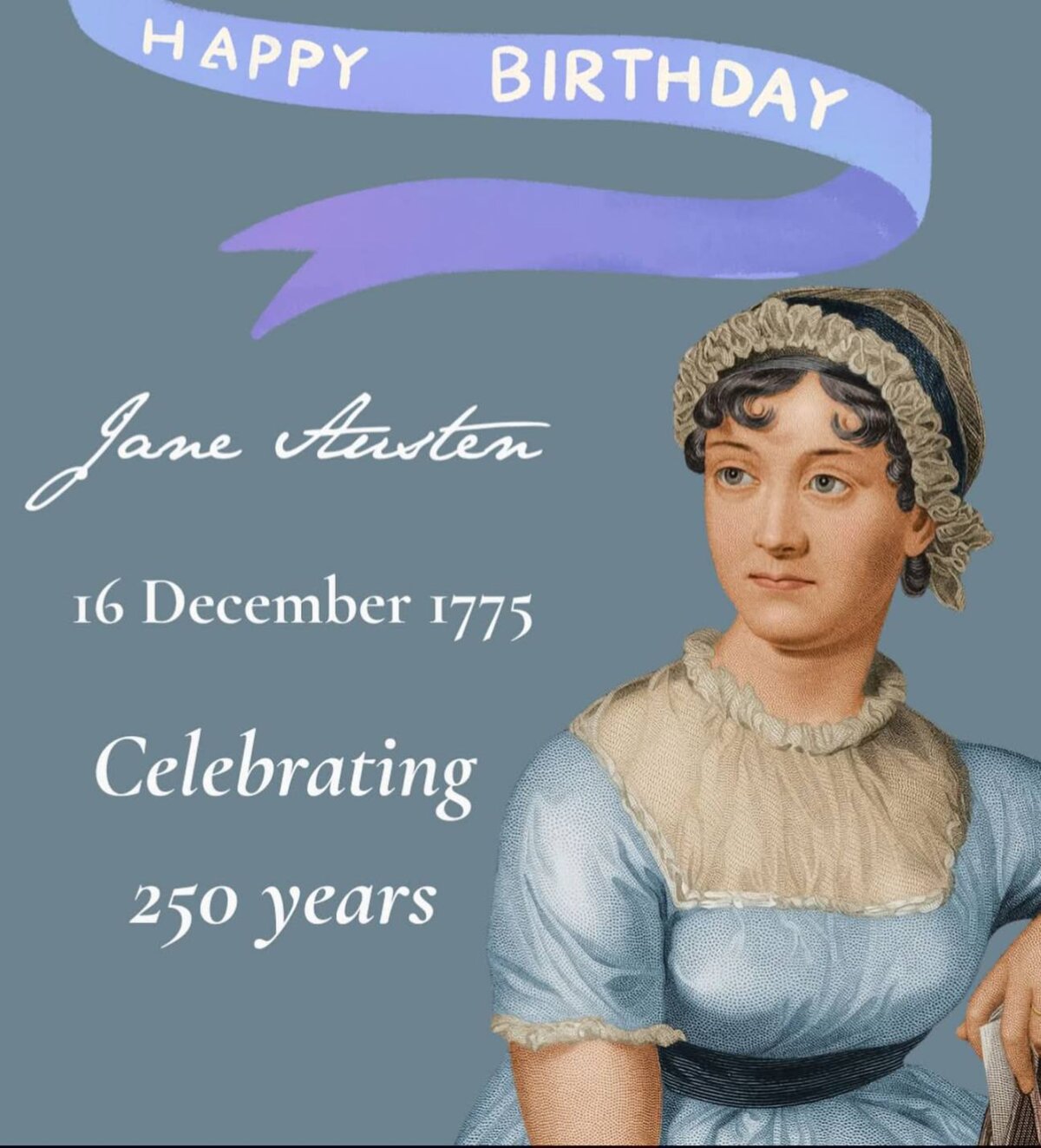
Agrandissement : Illustration 1
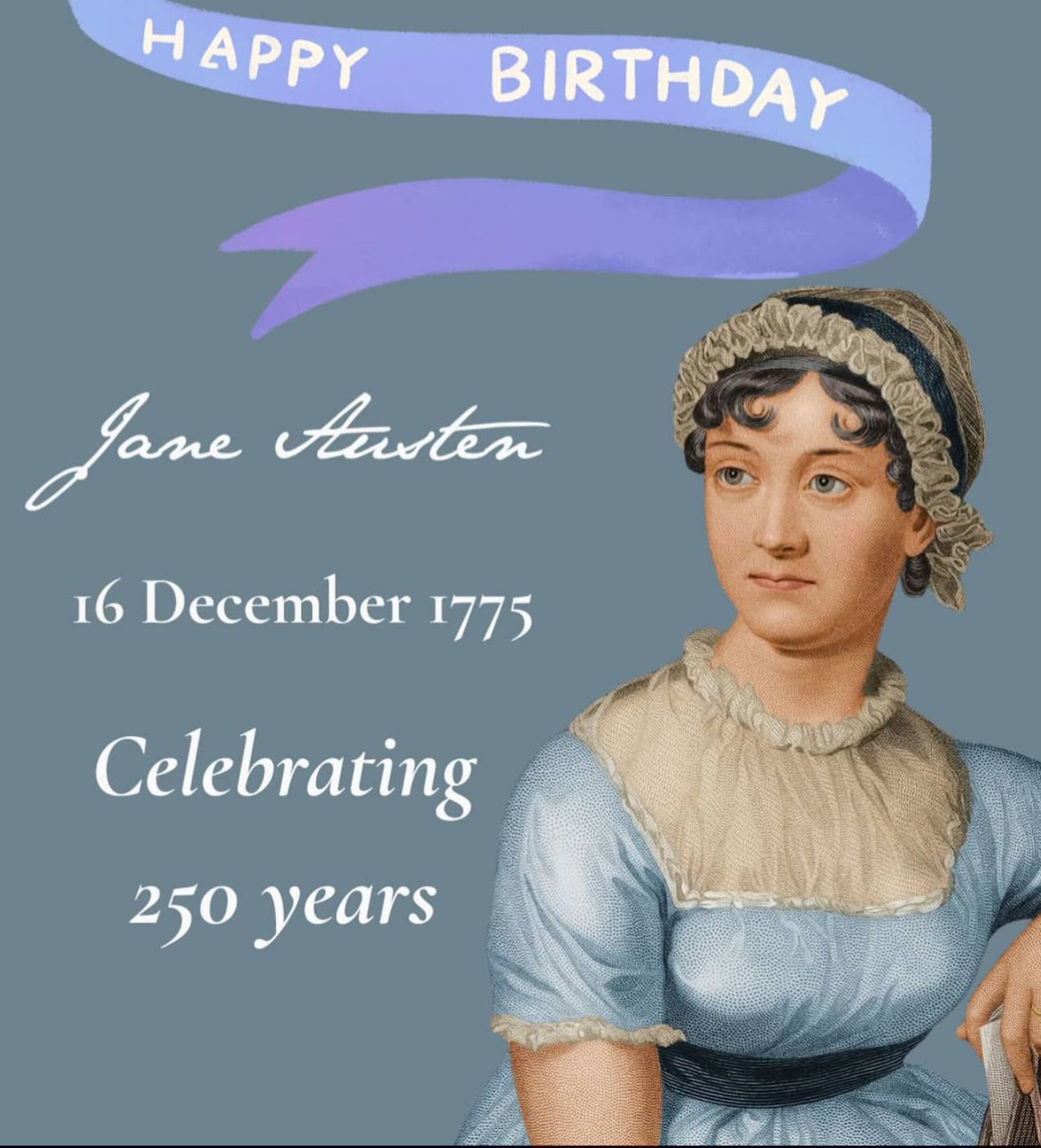


Agrandissement : Illustration 3
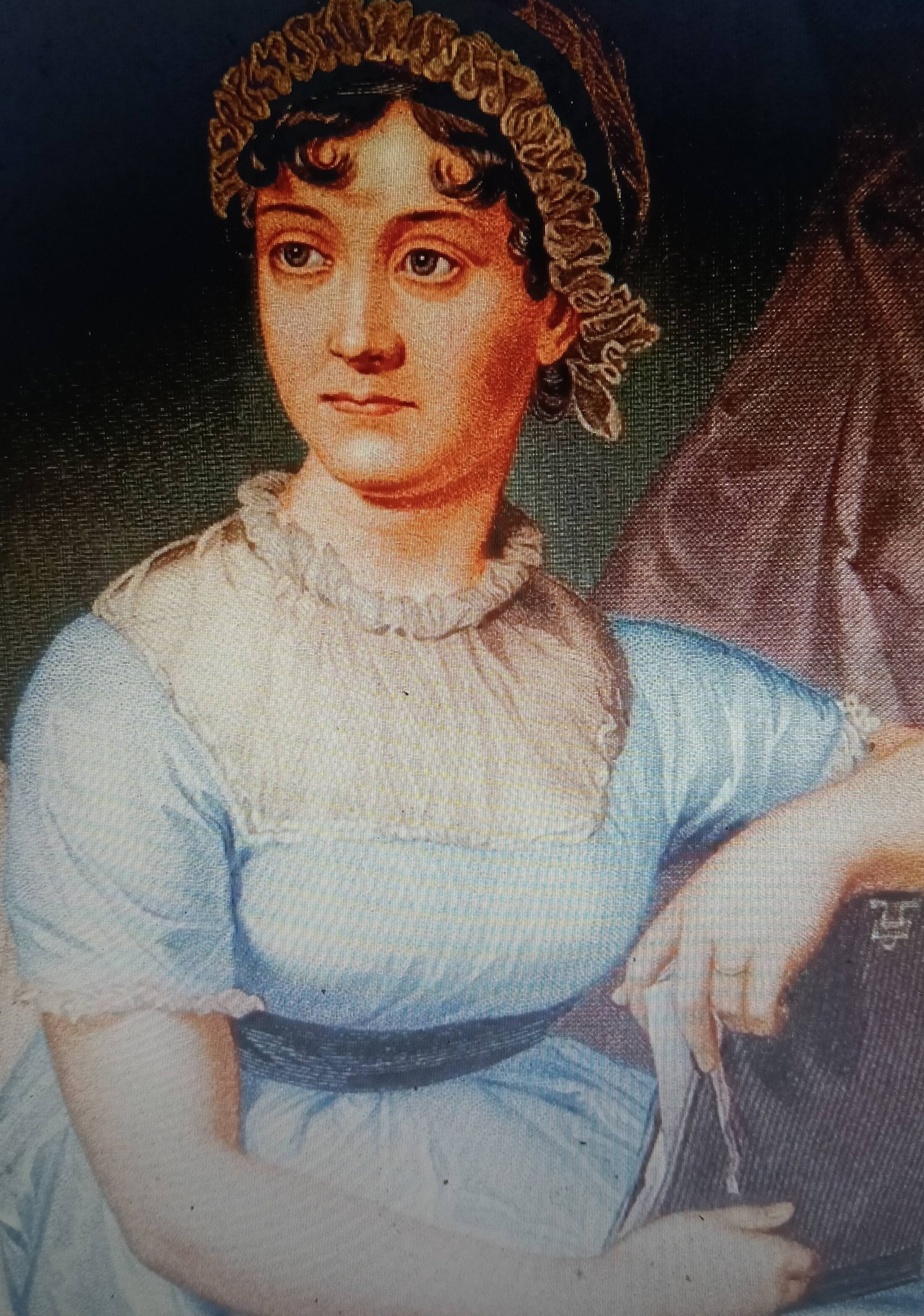
«Jane AUSTEN (1775-1817), English writer of the Regency era, feminist and Romantic realist, whose work explored a quest for freedom and independence within a royalist and aristocratic society. Happy 250th Birthday !», by Amadou Bal BA
December 16, 2025, marks the 250th anniversary of Jane Austen, a 19th-century author and a leading figure in English realist literature. Talented and timeless, she penned romances and social critiques that have stood the test of time. From "Pride and Prejudice" to "Persuasion," her elegant and ironic style continues to inspire modern literature. In her insightful social commentary, Austen masterfully portrayed the complexities of family life, the machinations of the heart, and social conventions of the Regency era, employing irony, social critique, and explorations of heartache. In particular, her great novels center on a profound meditation on the condition of women, the pursuit of marital happiness, and the balance between personal desires and the demands of a rigid yet avaricious society. Jane Austen's literature, far from being bland or innocent, and imbued with a great deal of British humor, remained largely unknown to French readers for a long time due to language barriers. However, Jane Austen has remained remarkably modern, and posterity has granted her a prominent place. Indeed, she explores the individual's place in relation to conventions, the balance between feeling and reason, the quest for female emancipation, and the critique of power dynamics. The heroines of her novels, both strong and vulnerable, continue to resonate in the contemporary world because of their thirst for emancipation and freedom. "Why not enjoy pleasures immediately? How many moments of happiness have been spoiled by too much preparation?" she asks. A resolute and determined woman, Jane Austen knew what she wanted. "My courage increases with every attempt to intimidate me," she writes.
Jane Austen was born on December 16, 1775, in Steventon, Hampshire, in southern England. She was the youngest of eight children. Her father, George Austen (1731-1805), was a clergyman; her mother, Cassandra Leigh (1739-1827), counted among her ancestors Sir Thomas Leigh, who was Lord Mayor during the reign of Queen Elizabeth. The Austen family's income was modest but comfortable. Her literary ambitions, experience, and observations of English society were limited to the provincial class; however, her literary genius far surpassed mere entertainment for her family. Her literary contribution reveals the disparity between her parents' financial situation—they owned property but were heavily in debt—and her own awareness of belonging to high society, yet lacking the means to maintain that status. Her literary fame, however, came posthumously. Indeed, Jane Austen imbued her novels with a modern dimension, thanks to her keen observation of the daily lives of the middle class. Like Balzac, she created a timeless human comedy, an ironic and psychological prose of the society of her time. Her parents provided her with a gentry education. In 1782, Jane and her sister Cassandra were sent to school in Oxford, then Southampton, and finally to the Abbey School in Reading. After a brief formal education, which she supplemented with her father's library and family conversations, Jane began to write. She worked tirelessly, practically until her untimely death, despite a painful love affair, the death of her father, and illness.
Jane Austen was therefore a contemporary of great authors, including Eliza Fletcher (1770-1858), Anne Woodroffe (1766-1830), Mary Martha Butt (1775-1795), Charlotte Elizabeth Tonna (1790-1846), Mary Somerville (1780-1872), and Harriet Grote (1792-1878). This was a pivotal era of change, during which these authors, fighting for women's emancipation, were determined to challenge the stronghold of patriarchy. Jane grew up in a family of the rural gentry, where reading, reflection, and writing were cultivated. "I declare that, after all, there is no pleasure worth reading," she said. Aware of the gap between her family's economic situation and their deep aspirations to rise above their means, Jane Austen bridged this gap through her novels. "It is not what we say or think that defines us, but what we do. Self-knowledge is the first step toward truth," she wrote. Indeed, Austen focused on describing the customs and evolution of this social class, obsessed with money and success, yet facing stiff competition from the rise of a nascent bourgeoisie, newly rich through talent and hard work. Consequently, money is central to her fiction. Her two brothers were sailors, and Austen demonstrates that social mobility is not impossible; one can move from wealth acquired through nobility or land to a fortune and a status attained through education or talent. From a very young age, she observed the family dynamics and financial stakes surrounding the marriages of her relatives. Her sharp mind, sense of humor, and ability to critique society from within were already emerging. After her father's death, the family moved several times, notably to Bath, where the young woman immersed herself in high society and the thermal baths, a setting that would later inspire "Northanger Abbey."
The Regency period, between 1811 and 1820, saw the invalid King George III cede power to his son. Culturally, this era was marked by the emergence of a wealthy bourgeoisie and an aristocracy anxious to maintain its status. With subtle yet fierce irony and a sublime style, Jane Austen invented an original narrative structure: lively dialogue, sarcastic tones, and a focus on the inner thoughts of her heroines and their struggles to reconcile heart and reason. Written anonymously, his major novels include, in 1811, "Sense and Sensibility" or "Reason and Feelings", in 1813, "Pride and Prejudice", in 1814 "Mansfield Park", in 1815 "Emma", and then, posthumously, in 1817, "Northanger Abbey" and "Persuasion".
I – Jane AUSTEN novels celebrating free and independent women
Intellectual and class prejudices, renowned for its caustic style, Jane Austen's most famous novel, "Pride and Prejudice," features the Bennet family, composed of five sisters whose mother is determined to marry them off advantageously. "The privilege I claim from my sex is that I can love longer, even when the object or the hope has vanished," wrote Jane Austen. Elizabeth Bennet, the most spirited and independent, crosses paths with Mr. Darcy, a taciturn and proud aristocrat. Between pride and prejudice, their relationship evolves through misunderstandings, hasty judgments, and revelations that shatter appearances. The novel's protagonist, Elizabeth Bennet, symbolizes intelligence, humor, and honesty. She refuses to marry a man for purely financial gain and prefers to prioritize moral and emotional compatibility. "From the very beginning, I could say from the first moment I saw you, I was struck by your pride, your arrogance, and your selfish disregard for the feelings of others. I had known you for less than a month, and already I felt that you were the last man in the world I would consent to marry," she wrote.
Her relationship with Mr. Darcy highlights mutual prejudices and the necessary evolution to overcome social pride. “Vanity and pride are two very different things, though the words are often used interchangeably. One can be proud without being vain. Pride has more to do with the idea we have of ourselves, vanity with what we would like others to think of us,” she writes. A magnificent and moving novel, set in a hypocritical and self-serving society where women had no voice, let alone the opportunity to become writers, it is a denunciation of the provincial aristocracy, of nobility acquired through money or marriage. The famous opening of “Pride and Prejudice,” in which Elizabeth Bennet is the heroine, emphasizes the irreconcilable nature of marriage and love, describing the relationships between men and women as a transaction. "It is a truth universally acknowledged that a single man in possession of a good fortune must be in the mood for a wife, and, however little one may know of his feelings in this regard, when he arrives at a new residence, this idea is so firmly fixed in the minds of his neighbors that they at once regard him as the rightful property of one or the other of their daughters," wrote Jane Austen.
"Sense and Sensibility" recounts the story of Elinor and Marianne Dashwood, two sisters with contrasting temperaments: Elinor embodies restraint and rationality, while Marianne is guided by her passionate impulses. Through their romantic experiences, Jane Austen contrasts the pragmatic dimension of marriage, dictated by reason, with the romantic dimension, inspired by feelings. This meticulously crafted novel, with its irony, wit, and cynicism, depicts a bygone and obsolete world and is a powerful indictment of arranged marriages based on economic gain. "People are valued by the measure of their fortunes, their incomes, or their future inheritances. With rare exceptions (doctors), no one works or no longer works (colonel) while enjoying comfortable and eternally stable incomes," writes Jane Austen. This novel perfectly illustrates the tension between emotion and lucidity in a world where propriety reigns supreme, yet with the emergence of individualism, love, and a demand for women's freedom. Male characters such as Edward Ferrars and Colonel Brandon grapple with societal expectations while simultaneously facing emotional dilemmas. Jane Austen develops an even more restrained narrative style than in "Pride and Prejudice" and explores the place of women within a patriarchal structure. Indeed, in the 19th century, women, lacking independence, possessed no personal property, were excluded from the right to own property, and were considered part of the family, particularly the husband. Virginia Woolf (1882-1941), one of Jane Austen's biographers, drew literary conclusions from this in "A Room of One's Own." For Virginia Woolf, her predecessor, Jane Austen, a talented writer, was neither austere, formalistic, nor taciturn. "One after another she creates her fools, her pedants, her socialites, her Mr. Collins, her Sir Walter Elliott, her Mrs. Bennet. With a crack of her whip she encircles them with a stinging phrase which, as it wraps itself around them, clothes them for winter," wrote Virginia Woolf.
A highly accomplished comedy of manners and coming-of-age novel, "Emma" portrays an arrogant and self-assured heroine, Emma Woodhouse, who believes she excels at the art of matchmaking, while considering herself happy in her independence. Convinced of her competence as a matchmaker, she sometimes creates chaos by manipulating encounters and misinterpreting the feelings of those around her. This novel by Jane Austen highlights the ironic dimension of class consciousness and the naiveté of a young woman who, ultimately, is unaware of her own romantic desires. It is one of the books where Jane Austen's irony reaches its peak: Emma is by turns funny, endearing, but also a source of chaos in her social circle. The character of Mr. Knightley, lucid and benevolent, provides a moral counterpoint. Selfish and self-assured, Emma Woodhouse is nonetheless charismatic and generous, though sometimes intrusive in the romantic lives of those she knows. As the novel unfolds, she learns humility and discovers her own feelings and the limitations of her supposed matchmaking skills.
Jane Austen's last complete novel, "Persuasion," tells the story of Anne Elliot, a 27-year-old woman who regrets breaking off her engagement to Frederick Wentworth under the influence of her family. Austen adopts a more melancholic tone, highlighting Anne's maturity and clear-sightedness, constrained by the social hierarchy of her aristocratic family.
Jane Austen's novels deal with social criticism and hypocrisy. "The discourse of received opinion is the cement of social cohesion. It fosters the logic of identification with a group. A social group recognizes itself by its idiom and its master signifiers. These signifiers function as signs of recognition. All these signs, in reality, boil down to a single sign: money. The only discourse capable of opposing this logic of capital is the discourse of love. The experience of love is an aspiration for a new discourse. Lovers must invent a new idiom allowing them to establish a 'we' that is no longer the 'we' of social discourse. The irony of Austen's writing attacks this idealism," writes Sophie Demir. Beyond the comedy of manners, Jane Austen satirizes the superficiality of the bourgeoisie and the rural nobility. Balls, soirées, and courtesy visits are all opportunities for the author to expose self-serving maneuvers, the obsession with status, and the fear of scandal. “Jane Austen’s wit is matched by the perfection of her taste. Her fools are fools, her snobs are snobs, because they deviate from the model of reason and common sense she has in mind, and which she undeniably conveys to us while making us laugh. Never has any novelist made such perfect use of a sense of human values. It is with unwavering courage, unalterable good taste, and an almost austere morality that she unmasks these breaches of goodness, truth, and sincerity, thus composing some of the most delightful lines in English literature,” writes Virginia Woolf.
Ultimately, Jane Austen is a realist writer, in a rigid society where censorship was still the norm, "and in terms of character creation, for her realism is manifested primarily in her portraits. If a character is ill-mannered, or comical or foolish, he has the right to speak vividly and naturally. The reader of Jane Austen, even the educated reader, suffers the constant humiliation of seeing the English he himself speaks attributed to the madmen and grotesque characters in her work," wrote Smith Goldwin in 1890. Jane Austen's virtuosity also lies in her style, which denounces a hypocritical and self-serving morality: "Even if the pangs of excessive vanity, or even the fire of outraged morality, were to urge us to improve a world so full of malice, pettiness, and foolishness, it is a task beyond us." The discernment is so perfect, the satire so accurate, that though these traits are sustained, they almost escape us. Not a shadow of pettiness, not an ounce of malice, disturbs our contemplation. Pleasure mingles strangely with our amusement. Beauty illuminates the folly,” wrote Virginia Woolf.
Jane Austen, living during a conservative period in which marriage was seen as about consumption and possession, had the audacity, through her novels, to celebrate women's independence and emancipation. Although Jane Austen's heroines are not rebels in the modern sense, they yearn for the recognition of their feelings and a degree of free will. "Pride and Prejudice" illustrates Elizabeth Bennet's refusal to submit to an arranged marriage. As for "Sense and Sensibility," the novel highlights the solidarity between sisters, while the heroine of "Emma" claims individual freedom, even if she is forced to backtrack. This quest for relative independence reflects the evolving attitudes of the Regency era. "The adolescent who crafted her sentences so beautifully at fifteen never ceased to do so, and never wrote for the Prince Regent or his librarian, but for the world at large." She knew exactly what she was capable of, and knew the material that was most appropriate to her, since a writer with high standards had to make that material her own. Certain emotions were beyond her grasp; emotions that no style or artifice could have enveloped and concealed on its own. For example, she was incapable of making a woman become inflamed by banners and chapels. She was incapable of plunging herself enthusiastically into a romantic moment,” wrote Virginia Woolf.
II – Jane AUSTEN, Jane Austen, celebrated by posterity
Jane Austen died on July 18, 1817, at the age of 42, in Winchester, Hampshire. 250 years after her birth, the cultural legacy she has left behind is immense. “Curiously, her gifts were perfectly balanced. None of her completed novels is a failure, and very few of her many chapters are noticeably weaker than the others. But, after all, she died at forty-two. She died at the height of her powers. She was still at the mercy of those changes which often make a writer’s later period the most interesting of all. Lively, irrepressible, endowed with an exuberant imagination, there is no doubt that she would have continued to write, had she lived, and one might be tempted to wonder whether she would have written differently. The boundary was drawn; the moon, the mountains, and the castles lay on the other side,” wrote Virginia Woolf.
Jane Austen, far more than a specialist in sentimental novels, has found her place in posterity. “There are books anchored to ages, suspended like clouds in distant eras. Strangely immortal books, guardians of a part of ourselves. Jane Austen’s novels are among them. She wrote about her immediate surroundings, about a close-knit and talkative society she knew intimately. Much of her life is reflected in her books: close-knit siblings, affectionate fathers, nosy neighbors. But also the beautiful and peaceful countryside, the tranquility of winter evenings, the ball as the sole place for socializing, the eternal quest for a suitable match, and the injustice of the patriarchal inheritance, which she herself personally endured,” writes Laura El Makki in the preface to the biography Fiona Stafford. Indeed, her humor, her insolence, her acerbic portraits, her grievances against the society of her time, and her luminous style have always made her a timeless figure. In our time, Jane Austen is the object of immense enthusiasm and veneration. The centenary of the author's birth in England in 2015, celebrated with cultural events, films, and the dissemination of her books, gave her even greater visibility. A festival, established in September 2025, has been held in her honor in Bath, in southwest England, where she lived for several years and which serves as the setting for two of her books: "Northanger Abbey" and "Persuasion." Following the Bridget Jones phenomenon, French fans celebrated Jane Austen's 250th birthday by organizing a Regency-themed ball in Paris, complete with period costumes and a performance by the Chestnut dance company, a country dance group led by Cécile Laye. More than just a tribute, this anniversary highlights the enduring appeal and impact of an author whose stories, written over two centuries ago, continue to resonate with readers worldwide—a phenomenon that is only growing. "Jane Austen is a true cult figure. Through reading her work, we discover a relevance that is constantly being renewed. She had a caustic and mischievous sense of humor, and her novels are brimming with satire, wit, and humor." "His themes have a universal, timeless character, his chiseled but accessible style, in a light and insightful tone, remain engaging and recognizable, and promote this freshness," says Rosana GANGEMI, professor of literature, at Paris 8.
If Jane Austen has stood the test of time in literature, it is for her elegant style, her humor, and her ability to decipher human relationships and social codes. A feminist before her time, Austen analyzed her century, an era frozen in its certainties and social classes. Indeed, between marriage and seclusion, Jane Austen explored the condition of women from the rural gentry of the early 19th century, never hesitating to criticize the social conventions of the time. Women were still considered things that men could buy. Now, with women having become mistresses of their own destinies, the concept of a "good marriage" is no longer relevant. Her fight for women's rights—to choose, to love, and to be independent—was ultimately victorious. In 1795, Jane Austen, twenty years old, was preparing to celebrate Christmas for the first time in her life without her beloved sister Cassandra, who was spending the holidays with her future husband's family in Kintbury. While delighted by this union, Jane felt a certain apprehension at the thought of becoming her mother's next marriage obsession. For her part, Jane had absolutely no intention of looking for a suitable match: her sole desire was her literary ambition and to become a successful author. Yet that winter, her encounter with the charming Tom Lefroy turned all her plans upside down. It was love at first sight. But the young man was soon called back to London, leaving Jane heartbroken and without any promises. A heartbreak she would strive to transcend through writing: sixteen years later, after facing countless struggles and disappointments, Jane Austen published her first novel. Jane Austen “would have taken a step back from her characters, observing them more as a group, less as individuals. Her satire, while less prominent, would have been more biting and severe. Jane Austen would have been a precursor to Henry James and Proust, but enough. Such speculation is futile: the most perfect female artist, the writer whose books are immortal, died ‘just as she was beginning to believe in her success,’ writes Virginia Woolf.”
Jane Austen's literary contribution deals with social hierarchies and conventions. A realist writer, drawing on humble or modest people, Austen rehabilitated those who lived on the margins. Indeed, her unforgettable heroines and her sharp eye for society captivate readers more than ever. "To reproduce a flat, average life, where nothing is salient; to offer the public pictures without beauty, having only their accuracy as merit; to enable this public to verify your observation at leisure, since it concerns accessible environments and familiar types, is an arduous but tempting task. Jane Austen succeeded admirably. Her secondary characters are the most enduring: a poor, kind, humble, and talkative woman: Miss Batis; a gentle old man, unconsciously selfish and sweetly obsessive: Mr. Woodhouse; "A vulgar and narrow-minded mother, without morals or judgment, who still doesn't understand the sarcasms her husband has been hurling at her for twenty-five years: Mrs. Bennett, these are the heroes of Jane Austen. They are nothing exceptional, except for the power with which they are recreated by the artist who is having fun with them," wrote M. CLEMENT in 1908.
Jane Austen's novels, which portray the aspirations of young women in English high society, are steeped in a religious atmosphere, yet remain secular and non-moralizing. "While Jane Austen's novels employ the language of morality, the discourse is not moralizing. The use of irony neutralizes any definitive judgment. Judgment is left to the reader," writes Sophie Demir. Critics have praised Jane Austen's narrative structure, marked by sophisticated language, subtle yet devastating and acerbic humor, and an indirect, free-flowing tone. Jane Austen is "the beauty of words," says Catherine Bell. Jane Austen's style is characterized by elegant, polished language, subtle yet acerbic humor, and frequent use of the indirect point of view, which allows the characters' thoughts to shine through. The dialogues are lively and ironic, allowing Jane Austen to celebrate the complexity of life.
Unknown during her lifetime, and receiving very little recognition, 250 years after her birth, Jane Austen has become a global literary icon. Critics have praised the accuracy of her character portrayals, her brilliant style, and her narrative structure; thanks to her literary genius, Jane Austen, translated into every language, is an author enshrined among the great classics of literature. “To love Jane Austen is a mark of culture, a guarantee of good taste that one gives to others and to oneself. A foreigner who reads her, despite the enormous difference in eras and social circles, thinks from time to time of Flaubert or Anatole France, or even La Rochefoucauld; he continues, the charm penetrates him, subtle and sure; he laughs to himself, and is glad he laughed. It's because one has the vague impression that one must be intelligent to take pleasure in such a delicate, such a detached art; "One feels one is faced with a pure intellectual pleasure, where no popular element enters, and in realizing that one truly enjoys it, without illusion and without snobbery, one rises in one's own esteem: there is a kind of vanity in being sure that one loves Jane Austen," wrote Mr. Clement as early as 1908.
Jane Austen, hailed as an object of veneration and placed on par with William Shakespeare by Virginia Woolf for her malevolent, eccentric, ridiculous, or detestable characters, wrote "without hatred, without bitterness, without fear, without demands, without sermonizing. She knew words that have walked on people's lips, in their homes, in the streets, in the fields, for so many centuries and made them live forever," wrote Virginia Woolf. Indeed, Jane Austen's work has enjoyed an extraordinary destiny, through film adaptations (some fifteen movies), BBC television series, plays, and even musicals, such as "Pride and Prejudice" in 2005 with Keira Knightley, and "Sense and Sensibility" in 1995, directed by Ang Lee, which won an Oscar for its screenplay, written by Emma Thompson. “Jane Austen’s novels find their way into the hearts of readers because they possess that understanding of feelings without which the world is simply indecipherable. The mere pout of a young girl at a provincial dinner party tells us more about the workings of the planet,” writes Jean-Pierre Maugrette in the Revue des Deux-Mondes. Practicing flirtatious banter, Jane Austen “is part of a certain elegance, an innate repression of feelings, practicing an often devastating irony, heir to wit, that spirit of repartee based on a love of biting phrases, which the omniscient narrator readily delivers in the course of a sentence,” adds Jean-Pierre Maugrette.
Bibliographical References
A – Contributions by Jane AUSTIN
AUSTEN (Jane), Emma, Hauteville, 2020, 528 pages ;
AUSTEN (Jane), L’Abbaye de Northanger, Paris, Hautville, 2020, 288 pages ;
AUSTEN (Jane), Orgueil et préjugés, Paris 10-18, 2012, 384 pages ;
AUSTEN (Jane), Persuasion, traduction Jean-Yves Cotté, Hauteville, 2021, 384 pages ;
AUSTEN (Jane), Raison et sentiments, Paris, France Loisirs, 2011, 362 pages.
B – Reviews and Biographies
AUSTEN-LEIGH (William), Jane Austen, Her Life, and Letters. A Family Record, Londres, Smith Elder, 1913, 437 pages ;
BELL (Catherine), Jane Austen et la beauté des mots, traduction de Céline Maurice, Univers Poche, éditions Fleuve, 2025, 251 pages ;
BISSON (Julien) sous la direction de, Jane Austen, 250 ans d’amour et d’humour, Numéro Hors série Le Un des écrivains, éditions du 3 décembre 2025, 1 page ;
CLEMENT (M) «Le roman réaliste en Angleterre avec Jane Austen», Revue philomatique de Bordeaux et du Sud-Ouest, janvier-février 1908, pages 14-229 ;
DEMIR (Sophie), Jane Austen, une poétique du différend, préface de Richard Pedot, Presses universitaires de Rennes, 2015, 362 pages ;
FIRKINS (O. W), Jane Austen, New York, Henry Holt, 1920, 254 pages ;
FORSYTH (William), The Novels and Novelists of the Eitrhteenth Century, London, D. Appleton, 1871, 339 pages, spéc sur Jane Austen, pages 321-329 ;
GOLDWIN (Smith), Life of Jane Austen, Londres, Walter Scott, 1890, 238 pages ;
JOHNSON (Brimeley, R.), Jane Austen ; Her Life, Her Work, Her Family, and Her Critics, Londres, JM Dent, NY EP Dutton, 1930, 285 pages ;
LASCELLES (Mary), Jane Austen and Her Art, Oxfor, Clarendon Press, 1939, 225 pages ;
LITZ (A. Walton), Jane Austen. A Study of her Artistic Development, Londres, Oxford University Press, 1965, 198 pages ;
MALDEN (Charles), Jane Austen, Boston, Robert Brothers, 1889, 224 pages ;
MAUGRETTE (Jean-Pierre), «Pourquoi Jane Austen est la meilleure ? Lire Jane Austen aujourd’hui ?», Revue des Deux-mondes, mai 2013, pages 97-100 ;
MAZZENO (Laurence), Jane Austen and Two Centuries of Criticism, Rochester (New York), Camden House, 2011, 301 pages ;
MITTON (Geraldine, Edith), Jane Austen and her Time, Londres, Muttuen, 1905, 334 pages ;
MONARD (Isabelle) «250 après, mais toujours vivante, Jane Austen reste une icône culturelle», La libre, 16 décembre 2025 ;
MORINI (Massimiliano), Jane Austen’s Narratives Techniques : A Stylistic and Pragmatic Analysis, Farnham, Burlington (Vt) Asgate, 2009, 163 pages ;
RAGUE (Kate et Paul), Jane Austen, Paris, Henri Didier, 1914, 207 pages ;
SMITH (Goldwin), Life of Jane Austen, Londres, Walter Scott, 1890, 195 pages ;
STAFFORD (Fiona), Jane Austen, une passion anglaise, traduction Olivier LEBLEU, préface de Laura EL MAKKI, Paris, Tallandier, 2019, 218 pages ;
TANNER (Tony), Jane Austen, Cambridge, Harvard University Press, 1986, 291 pages ;
TODD (Janet), Jane Austen in Context, Londres, Cambridge University Press, 2005, 498 pages ;
TOMALIN (Claire), Jane Austen. A Life, Londres, Penguin, 2012, 400 pages ;
WARRE CORNISH (Francis), Jane Austen. A Life, Londres, Macmillan, 1913, 240 pages ;
WILSON (Mona), Jane Austen and some Contemporaries, préface de GM. Young, Londres, Cresset Press, 1938, 304 pages ;
WOOLF (Virginia), Jane Austen, traduction de Jean-Yves Cotté, Gwen Catala éditeur, 2017, 71 pages.
Paris, December 20, 2025 by Amadou Bal BA