



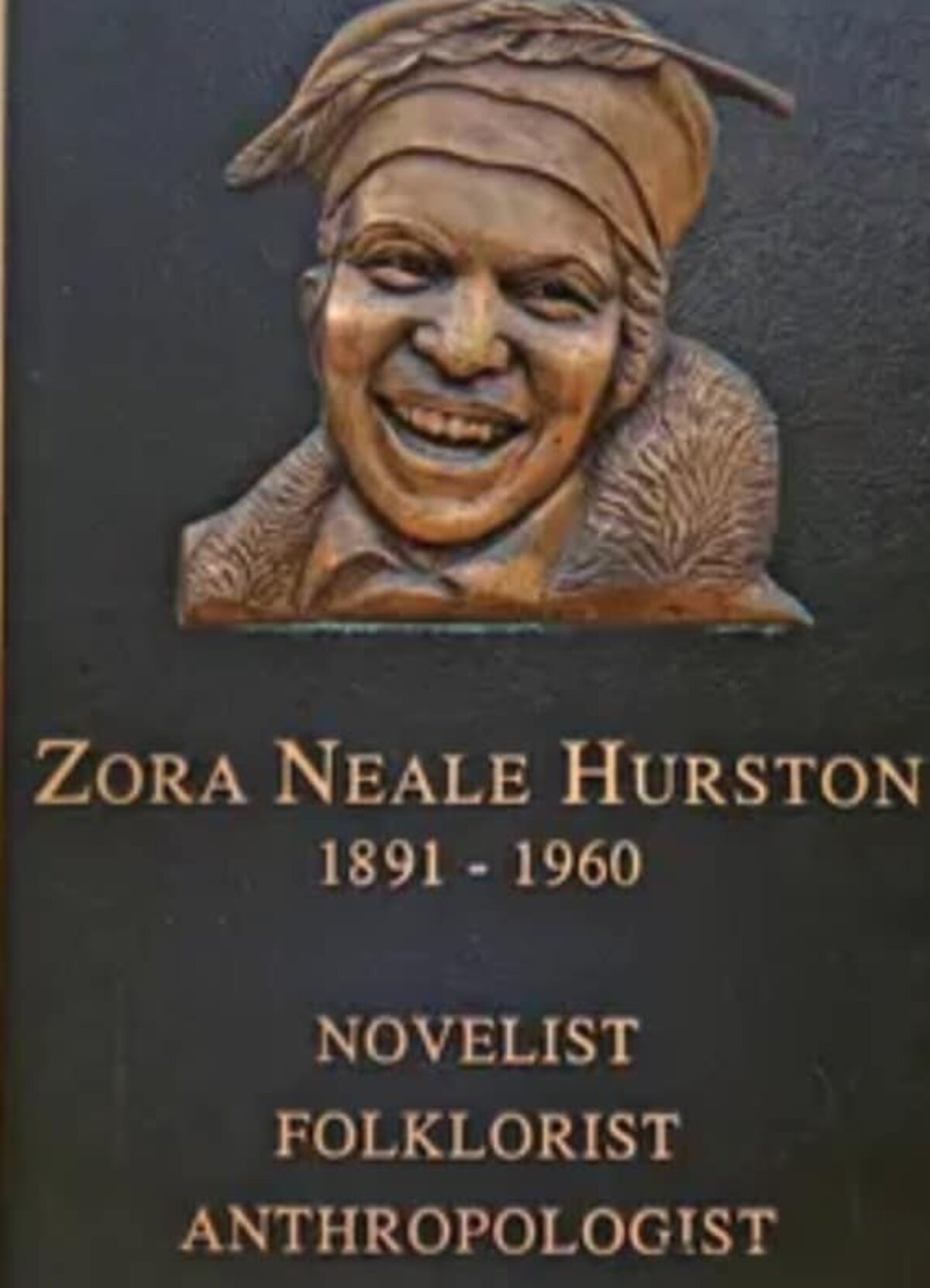
Agrandissement : Illustration 1
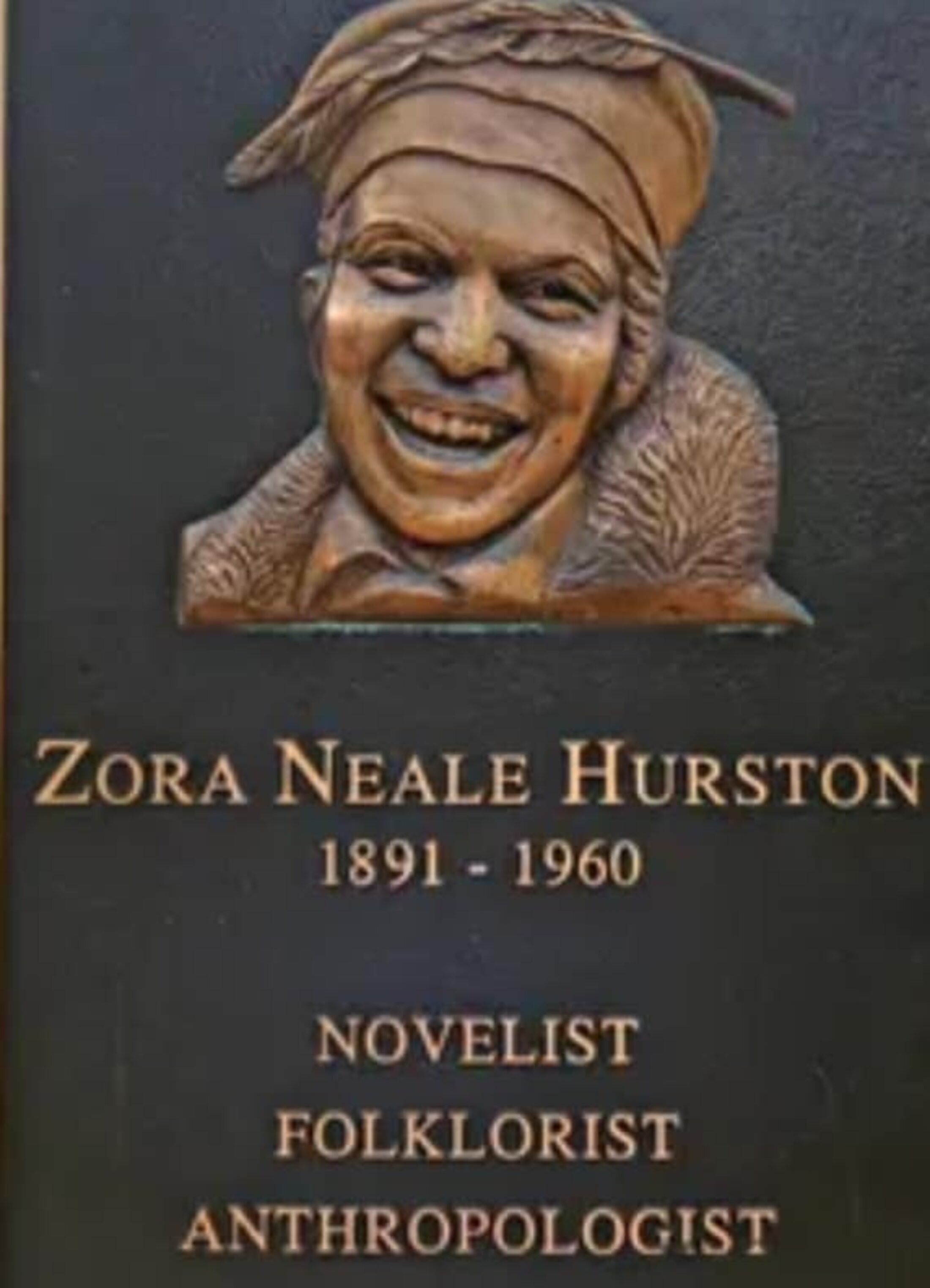
«Zora Neale HURSTON (1891-1960), Egerie of the Harlem Renaissance Movement, Feminist, Storyteller, Anthropologist, Playwright and Letter writer» by Amadou Bal BA
"Her name is little known in France, but Zora Neale Hurston's influence on American literature has been considerable. Toni Morrison, winner of the Nobel Prize in Literature, has repeatedly proclaimed her debt to the woman she considers her mother in literature. This is not surprising, since all of Hurston's work had set itself the task of restoring the richness and originality of the black culture of the United States, that of his childhood, and to transmit its heritage. [...] One of the most beautiful tributes ever paid to the culture of those who, willy-nilly, she considered as "her people", writes Didier ERIBON in the "Nouvel Observateur". Michel Fabre is very reserved, considering, and without demonstrating it, that the reputation of Zora Neale HURSTON would be overrated "Zora Neal Hurston is a champion of the black woman, full of resources and robust will, if not always freed from community constraints and male tyranny. Claimed as a figurehead by Alice Walker after thirty years of undeserved purgatory, she now enjoys an almost exaggerated reputation," he wrote in "Notre Librairie" of April 1994. It must be said that despite these praises of Didier ERIBON, the few books of Zora Neale HURSTON, translated into French (Barracoon, the story of the last cargo, Steps in the dust, But their eyes darted on God or Spunk, translation of Nancy Cunard's Black Anthology with articles by Zora Neale, A Black Woman), have not been reissued; and are therefore marketed by collectors or by Amazon. Therefore, and for the most part, Zora Neale HURSTON's literary contribution is in English, and therefore still remains, for French-speaking readers, especially Africans, in the strict confidentiality of insiders.
Robert ELLISON (1914-1994) had asked, in 1947, this question, at the heart of Zora Neale HURSTON's literary contribution: "Invisible man for whom do you sing? ». Indeed, this novel, "Invisible Man" tells the story, in the first person, of a poor and deserving young man who struggles in a hostile world, and who, from adventure to adventure, reaches success or, at least, wisdom. However, this picaresque hero does not escape his fate. It is impossible that, in a society which offers the talent and effort of a young, energetic and, as the Americans say, "harismatic" man, will not be able to rise to an enviable degree of scale, and will not, sooner or later, in addition to financial security, know notoriety and love of women. The hero, a young black man in search of his identity, does not fight on equal terms against society. From the outset, the dice are stacked. The auction is in monkey money, the path to success leads to a dead end, the exit is trapped. Because neither money, nor notoriety, nor the love of beautiful white women a little mature in search of primitive sensations satisfy the hero of this novel. This is its nobility. Individual success cannot satisfy him. It is the entire black race that should, along with itself, be snatched from its minority status and promoted to equal opportunity. "It was said then that the social difficulties of the Negro stemmed from his too high degree of visibility. The irony is that my character is invisible not only to others, but to himself. The Negro, in a white society where he is denied, necessarily finds it very difficult to be, and therefore, to see himself. The image of the white man, as it is formed in his consciousness from an early age, is so irresistibly powerful, and so terribly oppressive, that the Negro is reduced to seeing himself with the eyes of the White, that is, to hating himself, despising himself, denying himself. The way he looks at himself is pure negativity, a docile mirror." said Robert ELLISON. Neither integrated nor separated from the rest of the community, the hero waits for the eyes of all Republicans to decide. "I don't admire the tamer's courage at all. Once in the lion's cage, it is at least safe from men," said the British writer, George Bernard SHAW (1856-1950).
Anthropologist, storyteller, folklorist, playwright, specialist in "Black English", this vernacular of African-Americans, teacher at Barnard College University from 1925 to 1928 and at Columbia from 1928 to 1930, Zora Neale HURSTON, a feminist, marked literary history, especially within the Harlem Renaissance movement. "There's not a law on earth that can make a man a decent guy if he doesn't have that in him. There are plenty of guys who take a wife like we take a piece of sucking cane. It's round, juicy and sweet when you take it. But squeeze and grind in it, press and grind in it, and twist it until they get the last drop of pleasure. When they are convinced that it is twisted and wrung out, treat it as one does a cane chew. Throw it there. Y know what it is doing at the very moment, and hate to do it, but cling to it until it is empty. After, y hate her that she is only a chew of cane on their way" in "Spunk" with a vernacular of African-Americans, Zora Neale HURSTON violently rebels against misogyny, patriarchal society, and negroes are considered by men, black or white, as "mules". " charged with carrying their burden. The first black woman to engage in the fight for feminism, on this path requiring their autonomy, Zora Neale HURSTON urged to "Strike straight with a crooked stick." This literary orientation, considered "folkloric" or anthropology, has been very misunderstood by some Afro-African writers believing that Zora Neale HURSTON rowed against the current; the priority will be, according to the masters of thought of Harlem Renaissance, is the social or protest novel, and therefore the apology of literature fighting for civil rights, against racial segregation. Far from being these early anthropologists, measuring the skull of blacks, Zora was bold and innovative, in her search for black cultural heritage and their vernacular: "In the beginning and middle of her career, Zora was a cultural revolutionary simply because she was herself. His work was so vigorous among the rather pale productions of his many black contemporaries. During her last years, for reasons revealed for the first time, in her monumental work (as it is!), she takes fear of the life she has always courageously dared to experience before" writes Alice WALKER in the preface of Robert HEMENWAY's book.
Considered a minor artist during the Harlem Renaissance period, an era that wanted to bring out a "New Negro", Zora Neale HURSTON has sometimes crossed swords with this radical American left "I do not belong to the tearful school of blackness, which claims that nature has treated the Negro badly and is content to suffer. No, I'm way too busy sharpening my oyster knife," she wrote in "How It Feels To Be Colored Me." Zora therefore received love at first sight from Alain LOCKE (1885-1954): "This is folk fiction at its best, which we gratefully accept as a long-awaited replacement for so much defective local fiction about blacks. But when will the mature black novelist, who knows how to tell a story convincingly – which is Miss Hurston's birthplace gift – tackle the fiction of social documents? Southern progressive fiction has already banished the legend of those entertaining pseudo-primitives with whom the reader audience still loves to laugh, weave and envy. Having gotten rid of condescension, let's now move beyond oversimplification!" he wrote in "Opportunity" of June 1, 1938. Harlem Renaissance hardliners criticized Zora Neale HURSTON in her writings for a pastoral or folkloric vision, underestimating the harsh realities of racial segregation, exploitation, and misery. Also, Zora also came into conflict with Richard WRIGHT (1908-1960, see my article) of the radical left, whom she accused of "miserabilism". Richard WRIGHT felt that Zora's novel, "They Eyes Were Watching God," "willingly continues the tradition imposed on the negro in the theater, that is, the minstrel technique that makes white people laugh. Her novel is not addressed to the Negro, but to a white audience, whose chauvinist tastes she knows how to satisfy. His characters eat, laugh, cry, work and kill ; they swing eternally like a pendulum in that safe and narrow orbit in which America likes to see black people live: Between laughter and tears" writes Richard WRIGHT. Indeed, Zora Neale HURSTON's controversial and innovative feminism, her boldness and spirit of independence challenged white and black patriarchy, "I do not belong to any race, nor to any time. I am the eternal feminine with her pearl necklace," she wrote. This innovative vision of Zora had aroused the ire of Langston HUGHES "In her youth she always received scholarships, welfare and things from rich white people, some of whom simply paid her just to sit down and represent the black race for them, she did it in such a racy way to many of her white friends, without a doubt, she was a perfect 'Darkie', in the pleasant sense they give to the term, who is a naïve, childish, gentle, humorous and very colorful negro," he wrote in "The Big Sea."
In response to these diatribes, Zora Neale HURSTON, with her Southern genius, countered, like the proponents of the Harlem Renaissance, that she depicted a mode of behavior peculiar to a community that, after slavery, had learned to protect itself, subtly, and in a codified way, from the evils of racial oppression. Indeed, Zora Neale, in her literary contribution, is the first writer to seize the vernacular of blacks, to denounce the patriarchal society where the black woman, still remained "the Mule of man", to make their folklore, a symbolic affirmation of their identity, against all forms of oppression: " Novelist and anthropologist, Zora Neale Hurston is the writer who has best grasped the visceral element of black folk art, transcribing with the same happiness the dragging rhythm of Southern dialects and the verbal fireworks of New York marlous, the jargon of the Harlem Speakeasies or that of sawmill workers, "writes Françoise BRODSKY, in the preface of Zora Neal HURSTON's "Book of Harlem". Responding to what she called the "sobbing school of Negritude," Zora argued that black liberation also involves "the celebration of their culture and their own institutions. Depicting a lively and rich popular culture, where one sings, loves and laughs, like everyone else, portraying characters "complete, complex and not diminished", served his people much better than aligning himself with the aesthetic criteria of the dominant culture, "writes Françoise BRODSKY, in the introduction of a "Black Woman".
Moreover, Zora Neale, in her memoirs, treats in her own way, the racial question, omnipresent in her literary contribution "My people! My people! From the first swings of my cradle, I heard this cry rise to the lips of my family. He escapes to express pity, contempt and exasperated resignation. It is prompted by what a certain category of colored people think of the actions of another branch of the black brotherhood. Thus, well-behaved blacks groan when they board a train or bus and see their peers stripped of shoes, stuffing themselves with fried fish, bananas and peanuts and throwing the garbage on the ground. And these people don't just eat and drink. The culprits broadcast widely, without hiding anything of their intimate lives, and this, in a voice that encompasses the entire wagon. The well-dressed Negro shrivels in his seat, shakes his head and sighs: My people! My people! " she writes in "Footsteps in the dust". Zora Neale wanted to get out of the Manichaeism of racial clichés and highlight the complexity of life: "I learned that we do not judge people by their color. And racial clichés lost all meaning. I began to mock all those, blacks or Blancs, who thought they were blessed to belong to their race. It was not a curse to be black, or an asset to be white," she wrote in her memoirs. "Sometimes I feel discriminated against, but it doesn't make me angry. It simply amazes me. How can anyone deprive ourselves of the pleasure of my company? It's beyond me," she says.
Throughout her life, Zora Neale HURSTON fought against windmills, witchcraft trials or illegitimacy. The artist not only fought against his community, but also tried to survive against the pressure of publishers, the manipulation of patrons, the demands of foundation presidents, all from the white community and wanted to control or censor his writings. Writer at the top of her art, when the Second World War broke out, her copyrights were frozen: "Just like cold and seemingly lifeless rock, I buried memories in me from the materials that molded me. Time and Place have their say. So you will have to learn where I come from, from what place, from what time, so that you can interpret the incidents of my life and the direction it has taken," writes Zora Neale HURSTON. In fact, between Zora Neale HURSTON and Langston HUGHES, it is a story of friendship and betrayal. They met in New York between 1925 and 1931, when they broke up. They liked each other, without sex, collaborated on Fire magazine and participated in the Harlem Renaissance movement. "Their friendship, by turns warm, engaging, inspiring, intellectual, adoring, jealous, inflamed and condemned, informed virtually everything they wrote during those years, African-American literature quite different from all those that had preceded it," writes Yuval TAYLOR. But two artists had diametrically opposed characters: "Many authors have called Langston naïve. Zora is usually either a character or a stereotypical black woman. These represent the extremes of their characteristics. Langston did not let any woman enter his intimacy. Zora was passionate, jealous, stubborn and never hesitated to say what she thought, whatever the consequences," adds Yval TAYLOR.
Zora's work on Black folklore, and therefore their identity, including life stories, tales, and expressions of black orality, have left a red iron on her in certain circles, including patrons, foundations, and publishers. In fact, the literary commitment, in the movement of Harlem Renaissance, alongside Langston HUGHES (1901-1967, see my article), was unambiguous. Zora Neale HURSTON's pen becomes childish, superstitious, ironic, compassionate, joyful, and studies in modernity the ethnicity, vernacular, folklore and traditions of African Americans. In 2022, the French translation of the "Black Anthology" by Nancy CUNARD (1896-1965, see my article), made available to a wider audience, a whole series of articles by Zora Neale HURSTON dating back to the year 1934. Chosen among 130 contributors, including Langston HUGHES and Alain LOCKE, as well as WEB Du BOIS, for this Black Anthology, Zora Neale HURSTON is then recognized as one of the important markers of Harlem Renaissance. In the Black Anthology, the general theme dealt with are the characteristics of the Negro expression: "The universal capacity for imitation of the Negro is not so much a thing in itself as the proof of what runs through his whole being. And that thing is theatre. Language is like money. The life of the Negro is highly dramatic. Everything is dramatized," she writes. Zora treats, with a great height of point, not yet having taken a single wrinkle, conversions and visions (spiritual retreat, Shouting (Survival of the possession of African animist gods), sermon (the wounds of Jesus), Mother Catherine, Uncle Monday (Voodoo healer). It is in this sense that Maya ANGELOU (1928-2014, see my article) and Toni MORRISON (1931-2019, see my article) have a significant debt to him. Zora Neale HURSON "one of the greatest writers of our time" says Toni MORRISON, author of "The Bluest Eye". For Maya ANGELOU, "Zora Neale Hurston chose to write her own version of life in "Dust Tracks on a Road". Thanks to his images, one quickly learns that the author was born to wander, listen and tell a variety of stories. An active curiosity led her across the South, where she collected the feelings and words of her people as a demanding farmer might collect eggs. When she started writing, she used every site she had seen, every person she had met, and every exploit she had survived. A reading of Hurston is enough to convince the reader that Hurston had dramatic adventures and was a survivor par excellence," she writes in the preface to "Dust Tracks on a Road." "Zora Neale Hurston was a knockout in her life, a wonderful writer and a fabulous person. Devilishly funny and academically solid: delicious mix" adds MAYA ANGELOU.
In the end,in her assertive approach, far from sterile polemics, Zora adopted a committed literary attitude, a posture of self-affirmation while respecting the other. "The enthusiasm for Zora Neale Hurston's work today is the best testimony to her contribution to the awakening of African-American consciousness. No doubt, her training as an anthropologist, her rural origins, and the heyday of the Harlem renaissance, in which she took part, determined her commitments as a black artist and intellectual. As for the rather dull fate of her career, it is explained above all by the socio-political and literary context of the Great Depression which places her at the center of multiple solicitations due to editorial pressures and the apology of a literature of combat by black nationalists and communists" writes, in his thesis, Jean-Louis NDAMA. Indeed, Zora Neale HURSTON "has this spirit that has been particularly devolved to some women. Whatever she wears her black skin with ease, and thanks to it, can penetrate circles which no white man can force into into it, she seems to be able to stand outside her race and look at it objectively, while understanding it, since she is part of it" wrote Kiffin R. Hayes in 1946. "A wonderful everyday musician, Zora Neale Hurston resurrects the way black people do in a verbal fireworks display of Southern dialects and Harlem slang. The feminist revolt is also at the rendezvous, to which should be added a humor that squeaks like an old Blues torn from misery. A little pearl, let's enjoy it" writes André CLAVEL, in "The Thursday event", about the "Harlem book" by Zora Neale HURSTON. "Stories of women oppressed by the men of neighborhoods, gardens, these short stories have the brilliant vivacity and mischievous irreverence of ordinary moments seized to the quick" writes Catherine ARGAND in "Lire"?
Zora Neale Hurston was born on January 7, 1891 in Notasulga (Alabama, United States) and was named after a friend of her mother who was Lucy Ann POTTS married HURSTON (1866-1904), a schoolteacher. Zora was the fifth of eight siblings and her father's second daughter who died accidentally on August 10, 1918, mowed down by a train. "My father constantly threatened to break me, even if he had to kill me in the process. My mother intervened every time. She knew I was cheeky and quick to reply, but she did not want to break my "ardority", for fear of seeing me become a sweet doll of sound," she wrote. His father, John HURSTON (1861-1918), a Baptist preacher, widowed in 1904, quickly remarried in 1905 to Mattie MOGE, born 1885, then 20 years old, probably his mistress long before that. When Zora was three years old, her family moved to Eatonville, Florida, to a community of African-Americans where her father would become mayor of the city for two terms from 1897 to 1916. Zora would later describe Eatonville, established on August 18, 1866, as a second birth, a place where African Americans could live, as they wished, independently of white society, essentially Northerners more tolerant than Southerners. As a young girl, she was already passionate about literature. In 1904, his mother died and his father remarried almost immediately. His parents sent him to a Baptist school in Jacksonville. They eventually stop paying the fees, and the girl is expelled from school. Subsequently, Zora worked for some time as a maid for a theatre company. In 1917, pretending to be born in 1901, she enrolled at Morgan College and graduated in 1918. Zora was educated at Howard University and Barnard College, where she graduated in anthropology in 1928. Interested in African-American folklore and Haitian voodoo, she participated in the Harlem Renaissance or "Revival of African-American Culture", producing the literary magazine "Fire!!" . Subsequently, Zora wrote articles for various newspapers, worked in a library and then as a substitute teacher.
The literary contribution aims to restore the richness and originality of the black culture of the United States, that of his childhood, and to transmit its heritage. Also, in her autobiography, "Dust Tracks on The Roads", written in 1942, this writer, the first African-American graduate in anthropology, recounts her childhood as a small Florida town with the particularity of being composed only of blacks both in terms of inhabitants and leadership, in all political and administrative bodies. Against all odds in this part of America, whites and blacks live on excellent terms; little Zora, during this period, did not feel discriminated against. This idyllic vision was dented by the translator of her memoirs in France "When Bertram Linppicott asked her to write her autobiography, she complied with repugnance. She presents herself with false naivety in the guise of a poor but intelligent little girl, driven by a pressing need to succeed and whom racism has hardly touched; But it hides whole swathes of its past. She insists on the kindness of the whites who, since her birth, have always helped her, but does not speak of conflicts with her patrons or allude to them only to apologize, "writes François BRODSKY, in the afterword "Steps in the dust". This interpretation is disputed by Alice WALKER: "Zora grew up in a community of blacks who had enormous respect for themselves and their ability to govern themselves. His own father had written the laws of the town of Eatonville. This community affirms the right to exist. For many other black Americans, is this true? In her ease of acceptance, Zora looked more like a non-colonized African than her black American contemporaries; their darkness seemed strange to them" writes Alice WALKER in the preface to Robert HEMENWAY's book.
Therefore, having been born in the South, Zora becomes an attentive observer of this society harmonizes and mingles with adults, listens to all conversations, immerses herself in them. She will use all these memories and make materials, when adult, she will travel, notably for Franz BOAS (1859-942), founding father of anthropology at the Museum of Natural History in New York and then at Columbia University. Zora Neale HURSTON sets up a folk dance group about the culture of the South of the United States and then goes to Haiti to conduct research on local culture. His work is of major importance, particularly with regard to the use of drugs during voodoo ceremonies as a means of entering a trance. At the same time, Zora began writing short stories and articles. In 1954, Zora was sent to Jacksonville to cover the murder trial of Ruby McCOLLUM (1909-1992), a black woman who had killed, in 1952, C. Leroy ADAMS, a white doctor whom she accused of repeated rape. The case received media coverage. Zora also participated in the editing of "Woman in the Suwannee Jail", a book by William Bradford HUIE (1910-1986), journalist and civil rights activist. Despite the quality of his literary production, ("Mules and Men" in 1935, "They Eyes Were Watching God" in 1937), the commercial success, during his lifetime, had not been at the rendezvous, especially with regard to the transcription of the folklore of the Blacks, in fact a commission from white patrons: "Bitter of the rejection of the value of folklore, especially in the black community, frustrating what she felt was her failure to convert the African-American worldview into forms of prose fiction, Hurston eventually gave up," writes Robert Hemenway.
The recurring themes structuring Zora Neale HURSTON's literary contribution include race, gender, feminism, slavery and memory, religious belief, the forces of the spirit, in short a project of living well together, in tolerance. Her book, "They Eyes Were Watching God," published in 1937, was translated as "But Their Eyes Darted on God" by Zulma or "A Black Woman" by Le Castor Astral. It is the first novel by an African-American, claiming, bluntly, her feminism. In this initiatory novel, the central character, Janie Crawford, undertakes to escape from a mapped life where the white man throws to the blacks, who, in turn, want to unload on the black woman. However, Janie refuses to become her husband's "mule", and embarks on a metaphorical journey for women's liberation. "In contemporary black women's literature, women often appear as the pillars of the community, its cultural matrix, its cement. Endowed with great strength of character, they claim that their own culture in the face of white aesthetic criteria, their identity in the face of male oppression" writes Françoise Brodsky, in the preface to a "Black Woman". Indeed, in this novel, Janie returns to Eatonville, Florida, following the death of her husband, an old farmer, Tea Cake. As she returns under the setting sun, locals have mixed feelings about her. They make remarks borderline slanderous or mocking about him we talk about his age, his dress, his hair; Others believe that her husband did not die, but abandoned her. In this novel, several themes are evoked, including race; Zora Neale HURSTON seems to wonder if race is not, after all, socially constructed, that is, categories not based on biology but on concepts imagined by man. Nanny, Janie's grandmother, plays a very important role. It represents the slave past, liberation, but also the disorder that accompanied emancipation. As a slave, she has a typical experience of terror and oppression, and she is sexually exploited by the master, carrying her child. Nanny's status as a slave on a plantation is culturally passed on to Janie. Many of Nanny's fears and concerns, which affect Janie, were born during her time as a slave. The grandmother tries to protect her granddaughter from the real world covered with predation and violence, especially with regard to rumors and gossips. The novel deals with the question of class conflict, Janie seems in the eyes of some, to be affected by a decline, through her clothing effects. When Janie returns to Eatonville, she is wearing a jumpsuit, the type of clothing workers or farmers would wear. Women watching notice what a change this is from the beautiful satin dress she wore when she left town years earlier. This novel also deals with religion, a question also dealt with in another book "All the gods who are venerated are cruel. All gods lavish suffering for no reason. Otherwise we wouldn't love them. Through blind suffering, man knows fear and fear is the most divine of emotions. It is the stone of the altar and the beginning of wisdom. Demigods worship themselves in wine and flowers. The true gods demand blood," Zora writes in "A Black Woman." On the occasion of the occurrence of a hurricane, it is a reference to the title of the book, Zora Neale HURSTON writes "They seemed to look at the darkness, but their eyes looked at God". In other words, God's power is manifested in the hurricane; at the same time, they are at God's mercy, rather powerless and vulnerable. Here, facing the hurricane, a turning point in the novel, in the midst of all of Janie's many life choices, ultimately, God, or more generally the natural world, determines a person's fate or fate. In this symbolic or metaphorical literary language, the grandmother, Nanny, represents a spiritual figure, whose main goal in life is to put her granddaughter on the right track. "God tore apart the ancient world every night to make another one before daybreak. It was wonderful to see it take shape in the sun to emerge from the gray dust. Things and familiar beings had failed her, so Janie leaned over the fence and scanned the road in the distance. She now knew that marriage did not make love. Thus Janie's first dream died, and so she became a woman," Zora writes.
In "Mules and Men" of 1935, the text reflects well the work of anthropologist, folklorist in relation to the oral tradition collected by Zora Neale HURSTON, with a preface by Franz BOAS. In the confrontation between slavery and freedom, the central theme evokes the civil war and its horrors, as well as the Black Emancipation Act. Thus, the slave John challenges and defeats his master by his physical and intellectual abilities, illustrating the idea that blacks are not inferior to whites. As such, the character of John and his prevalence in these tales may reflect a fantasy of wish fulfillment for the slaves who originally concocted these tales: Although they may have been physically imprisoned by their masters their spirits were free to create great fantasies of escape or victory over their oppressors. Zora deals with the question of gender, this relationship between women and men. In her work as an anthropologist Zora noticed that women are often relegated to second place. In contrast, her tales, imbued with feminism, value the power and abilities of women to find ways to gain their independence and equality. This Voodoo novel is about conjuring, the power of the forces of the spirit, a traditional African religion, to change the course of destiny. In the thought of blacks, Nature occupies a primordial place. Man is in fusion with Nature, on which he depends for his life and survival. The mule is perhaps the most important symbol of nature, as it is an integral part of the book's title. The title "Mules and Men" implies that there are two distinct forces coming to play here, represented by these two entities, the mule and the man. In fact, these two symbols have similarities, with animals acting like men and humans acting like animals. In spite of an artificial representation or opposition, the two entities are complementary and interdependent.
In his book, "Barracoon: The Story of the Last Black Cargo", this is the story of the last slave. In December 1927, Zora Neale HURSTON had collected, in Mobile (Alabama) the story of Cudjo LEWIS (1841-1935), of the Yoruba ethnic group, from the village of Banté, in Dahomey, now Benin, in his crossing of the Atlantic, with 115 other African captives. Olualé KOSSOLA, his African name, then 19 years old, embarked in 1859 aboard the last American slave ship, the "Clotilda", departing from Ouidah, on the shores of Benin. Slavery had been forbidden since 1807, the Fon ethnic group of Dahomey had continued this trade considered lucrative; the roi Ghézo (1818-1858) of Dahomey thus resumed its wars and raids in 1857. Codjo evoked the assault on his village by the warrior wives of the king of Dahomey, the forced march of three months that followed, then the stay in the barracks of Ouidah. These buildings were used to contain Africans for export to Europe and the Americas. The Spanish term "barracó" can be translated as "barracks" and originally comes from the Catalan word "barraca", the "hut", "slave shelters" in contrast to the imposing houses or castles of the white masters, with their columns, servants and the great festivals: " I am not sure that there has ever been a more difficult book to read for those of us who have the duty to bear the ancestors, to work for them on a daily basis, while we lead our lives in the different places of the world where they have been led in irons. Those places where, slaves of white masters (with rare exceptions) cruel, or curious, or indifferent, they led a precarious and suspended existence, cut off from their real lives, and where we ourselves had to fight to defend our humanity and know the joys of life despite all the evil we have witnessed, or that we have been subjected to" writes Alice WALKER, in the foreword of "Barracoon".
After the harrowing crossing of the Atlantic, Kossola recounts his life as a slave in Alabama, from 1860 to the end of the Civil War. Freed, he and his family founded, not without difficulty, Africatown, a village now called Plateau, Alabama. The question of slavery, and therefore of memory, far from being "a detail of history" or a "competition of memories", is a central point: it is a crime against humanity, having preceded and justified colonization. "The indisputable fact that stuck in my throat was this: those of my people had sold me, and the whites had bought me. (...) It allowed me to grasp the universal nature of greed and the desire for glory," writes Zora Neale HURSTON, at the beginning of this poignant testimony. In the face of some miserable polemics of the supporters of the Code of indigénat, and their hatred, always quick to snap the whip: "Those who love us never leave us alone with our grief" writes Zora Neale HURSTON. It is a book, in relation to the confusionist spirits, wanting to question either the complicities, patent, proven, of the Arabs or the traditional African chiefs, in order to better acquit with the benefit of the doubt, those who organized this infamous trade for four centuries, has put things back in place: "Make no mistake: reading this book is a test. We are shown the wounds. Nevertheless, once again, the genius of Zora Hurston produces here an absolute masterpiece, or rather a masterpiece. What characterizes a masterpiece? It is the presence of a feminine point of view or narrative element in the construction of the building, whether of stone or fiction, without which the entire edifice would be nothing but a lie. And lies, we were served so much: Africans were only victims of the slave trade, not participants" writes Alice WALKER.
Having become free and far from his Africa of the depths, the message that Cudjo LEWIS' character gives us is that of wisdom and hope: "His happiness of being "free", how he participated in the creation of a community, a church, how he built his house with his hands The tragic deaths that followed. We see a man who feels terribly lonely away from Africa and without his family. And then the evidence strikes us: what he calls there is this thing that we make so much effort to suffocate, how we too feel alone in this country that is always foreign to us. How much we miss our true culture, our people, our singular connection with another vision of the universe. We also understand that everything we lack, as was the case with Cudjo Lewis, is gone forever. But we perceive something else, then: the nobility of a soul that has suffered almost to the point of being annihilated, but which continues to fight to be complete, present, generous. Animated by a growing love, a constantly deepening understanding of things. Cudjo's wisdom becomes so evident at the end of his life that his neighbors come to ask him to speak to them in parables. Which he does. Offering peace around him. This is the remedy" writes Alice WALKER.
Despite the quality of her literary production, a strong woman of character, Zora Neale HURSTON was unhappy in her private life, since her three marriages ended in failure. On May 19, 1927, Zora Neale HURSTON married Herbert Arnold SHEEN (1897-1976), a jazz musician less than six years older than the artist; They divorced on July 7, 1931, but remained on good terms. It was during this period that Zora began writing the biography on Codjo LEWIS, and a hurricane took the lives of 1800 irregular migrants. Zora remarried to Albert PRICE III (1891) from June 27, 1939 to November 9, 1943, then remarried to James Howell PITTS (1892-1969) on January 18, 1944 and divorced on October 31, 1944. Her last husband wanted her to give up her status as a writer. Alice WALKER rebelled against certain critics or biographers who unjustly attacked her private life. "Critics don't even like the 'scarves' on his head. They don't like her apparent sensuality: the way she tended to marry or not marry a man, but to appreciate them anyway, while never failing in her duties as an artist. They slyly implied that Zora would be gay, or at least bisexual. The accusation became humorous, and of course irrelevant, when you consider that what I wrote was one of the healthiest heterosexual loves in our literature," she wrote.
However, his love setbacks were at the source of part of his literary creation, remained largely autobiographical "They Eyes Were Watching God" is a love story (with Percy PUNTER). The inspiration for this novel came from Zora's affair with a man of Caribbean descent whom she had first met in New York in 1935. The relationship was stormy, perhaps doomed to failure from the start. The man did not support her literary ambition, but she could not break, on more. His collecting trip, with Lomax and his Gugg fellowshipinheim were both intended to break the relationship, to "moderate" his feelings" writes Robert HEMENWAY, one of his best biographers. "They Eyes are Watching God", a novel written in Haiti, was published in September 1937. Zora admitted these interferences in her private life and led her to a distanced literary creation: "The plot of the novel is far from these circumstances, but I tried to embalm all the tenderness of my passion for him in 'They looked at God'," she says. Critics hailed the novel as an apology of feminism: "Because Hurston set Janie on the path to self-realization, autonomy, and independence, 'Their Eyes Looked at God' was hailed as a feminist novel. Whether Hurston sees it that way or not, she conveyed a powerful message: women are equal to men in every way, and that their inner lives are infinitely rich and worthy of attention," writes Valerie BOYD.
In 1949, wrongly accused of molesting a ten-year-old boy and released in 1949, no publisher wanted to publish Zora anymore, and her literary career was ruined by this lie. While Zora was suffering from severe heart problems, in a letter dated January 16, 1959, she wrote to one of her publishers, Harper and Brothers, to let him know that she was working on a book project on "Harod The Great." On January 28, 1960, in Fort Pierce (St. Lucia County, Florida), Zora Neale HURSTON died of a heart attack; She is buried in an unmarked grave. Like Billie HOLIDAY (1915-1959, see my article), musician and Betty SMITH (1896-1972), writer, Zora "was now sick and alone, penniless and forgotten, without the fame or wealth that such a career could have provided" writes Alice WALKER in the preface to Robert HEMENWAY's book. Yale University had returned to her, in 1961, quickly forgotten: "To life, to her people, she left a legacy of beautiful writing and the memory of an iridescent personality of many colors. Its short shelf of writings deserves to be preserved. Without a doubt, his memory will remain in the minds and hearts of his friends. We are delighted that it has passed in this way so brilliantly but alas, too briefly" says Fanny HURST.
During her lifetime, seven books were published and the rest posthumously. What posterity for Zora Neale HURSTON?
"Personally, Zora was a complex woman with a great predisposition for contradictions. She could sometimes manipulate people to boost her career and she was a natural actress who could play many roles. Physically, he was an energetic person, capable of intense work for long periods of time, endowed with a personal effervescence. She had an instinct for advertising and she was able to commercially popularize black culture." writes Robert HEMENWAY. "What all my work will be, I don't know either; Every hour be a stranger to you until you live it. I want a full life, a righteous spirit, and a timely death," Zora Neale HURSTON wrote in "Dust Trucks on Road." After the death of Zora Neale HURSTON, in a certain destitution, Alice WALKER took the initiative, in 1973, with others, to have inscribed on her grave the epitaph, in Fort Pierce: "Zora Neale Hurston. A Genius of the South, Novelist, Folklorist, Anthropologist (1901-1960)". Since 1989, there has been an arts festival in Eatonville in tribute to the almost canonized writer. In 1994, Zora Neale HURSTON was inducted into the National Women's Hall Fame. Therefore, it was only after the publication, in 1975, of the article by the academic, Alice WALKER, Pulitzer Prize winner for her novel, "The Color Purple", born on February 9, 1944, in Eatonton (Georgia), not to be confused with Eatonville (Florida), "In Search of Zora Neale Hurston" or "In Search of Zora Neale Hurston", that Zora's work experienced a revival of interest and thus expurgated it from this long and unjust Purgatory: "Sentenced to life on a desert island, with a viaticum of ten pounds, I would choose, without hesitation, two books by Zora: "Mules and Men", because I would need to be able to transmit to the younger generations the life of black Americans as legend and myth, and "Their eyes darted God", because I would like to have fun while identifying with the black heroine, Janie Crawford, while she played many roles in a variety of contexts, and functioned (with spectacular results!) in romantic and sensual love. There is no book more important to me than this one" writes Alice WALKER. We feel the influence of Zora Neale HURSTON, in her way of conceiving God, through the character of Janie, reverence the Lord must be an active attitude and not passive: "They were sitting with others in other slums, their eyes stretched against Coarse walls and their souls asking if he wanted to measure their puny power against his. They seemed to stare in the darkness, but their eyes looked at God," she wrote. Alice WALKER adopts the same conception of God, in her novel, "The color purple". In hope, one draws near to God, not only in darkness, but by looking, through the darkness, to see God where others see darkness. In doing so, we have a kind of vision deifying darkness, replacing emptiness with presence, presence in darkness. We have the same vision of Toni MORRISON in "Paradis"; we come to God not by light, but by the ability to see in the dark. In the end, "if Hurston had not created a 'Janie' and a 'Phoeby', for example, it might not have been possible for Toni Morrison to produce a 'Sula' and a 'Nel', or for Alice Walker to create a ' Celie ' and " a Shug". In other words, because Hurston wrote what she wrote and published the books she published, American literature was changed for the better," writes Valerie BOYD, one of his biographers.
In 1990, Joan MANSON-GRANT of the University of Ontario, recalled Zora Neale HURSTON's major contribution to the affirmation of Black culture and its contribution to the universal: "The complete work of the short story writer/essayist/folklorist Zora Neale Hurston has recently been lovingly pulled out of the black hole of literary oblivion. This rescue took place during a period when increased attention was paid to marginal art and its various theoretical discourses. This historical and theoretical coincidence has led me to question the constant relegation of Hurston's work to the realm of the "literary genre" and the virtual absence of any exploration of its anthropological content. I believe that Hurston's work provides an example of the increasingly complex "field" within which anthropologists write culture, thus fueling the current questioning of the process, product, and status of ethnographic writing. His writings on culture come and go fascinatingly between fiction and non-fiction, white culture and black culture, the rich urban class and the poor rural class. By tracing the way in which Hurston's work deals with simple "us-them" oppositions and the search for a single voice, I argue that the theoretical deepening beyond deconstruction greatly sheds light on the politics of representation at work in Hurston's heterogeneous texts, and that it helps us to rethink their status as "representative," she writes.
REFERENCES
I – Contributions de Zora Neale HURSTON
HURSTON (Zora, Neale), «Communications», The Journal of Negro History, octobre 1927, Vol 12, n°4, pages 664-669 ;
HURSTON (Zora, Neale), «Caractéristiques de l’expression nègre», Anthologie noire, 1ère édition de 1934 de Nancy Cunard et 2022, éditions du Sandre, pages 63-90 ;
HURSTON (Zora, Neale), «Cudjo's Own Story of the Last African Slaver», The Journal of Negro History, octobre 1927, Vol. 12, n°4, pages 648-663 ;
HURSTON (Zora, Neale), «Dance Songs and Tales from the Bahamas», The Journal of American Folklore, juillet-septembre 1930, Vol. 43, n°169, pages 294-312 ;
HURSTON (Zora, Neale), «Hoodoo in America», The Journal of American Folklore, octobre-décembre 1931, Vol. 44, n°174, pages 317-417 ;
HURSTON (Zora, Neale), Barracoon : l'histoire de la dernière «cargaison noire» ou Barracoon : The Story of the Last «Black Cargo», préface d’Alice Walker, traduction de Fabienne Kanor et David Faukemberg, Paris, Jean-Claude Lattès, 240 pages ;
HURSTON (Zora, Neale), Des pas dans la poussière. Autobiographie d’une petite-fille d’esclaves, traduction, préface et note de Françoise Brodsky, La Tour d’Aigues, éditions de l’Aube, 1999, 343 pages ;
HURSTON (Zora, Neale), Une femme noire (Dust Tracks on the Road), traduction, préface et note de Françoise Brodsky, Le Pré-Saint-Gervais, Le Castor Astral, 1993, 201 pages ;
HURSTON (Zora, Neale), Dust Tracks on a Road, préface de Maya Angelou, Harper Colins, 1942, réédité en 1971 et 1992, 352 pages ;
HURSTON (Zora, Neale), Folklore, Memoirs and Others Writings. Mule and Men. Telle Me House. Selected Articles, préface de Maya Angelou, Harper Colins, 1995, 1001 pages ;
HURSTON (Zora, Neale), Le livre de Harlem, traduction, préface de Françoise Brodsky, 1985, éditions Zulma, 1996 et 2008, éditions de l’Aube 138 pages ;
HURSTON (Zora, Neale), Mais leurs yeux dardaient sur Dieu ou Their Eyes Were Watching God, traduction de Sika Farambi, Paris et Honfleur, Calvados, Zulma, 2018 et 2020, 320 pages ;
HURSTON (Zora, Neale), Spunk, Selected Short Stories, traduction de Françoise Brodsky, Cadeilhan, Gers, Zulma, 1ère édition 1993, réimpression, 1ère édiction 2002, 2004, L’Aube, 1998, 138 pages ;
HURSTON (Zora, Neale), Zora Neale Hurston : A Life in Letters, Carla Kaplan, éditrice, New York, Doubleday, 2002, 880 pages.
II – Reviews of Zora Neale HURSTON
BLANC (Carline), Ecrire le folklore : subversions épistémiques chez Zora Neale Hurston et Toni Morrison, thèse sous la direction de Jean-Paul Rocci, Université Paris-Est, Marne-la-Vallée, 8 décembre 2017, 454 pages ;
BLOOM (Harold), Zora Neale Hurston, New York, Chelsea House, 1986 et Bloom’s Modern Critical Views, 2007, 247 pages ;
BONTEMPS (Arna), «From Eatonville, Florida, to Harlem : Zora Hurston Has Always Had What It Takes and Lots of It», New York Herald Tribune, décembre 1942 ;
BOYD (Valerie), Wrapped in Rainbows The Life of Zora Neale Hurston, New York, London, Scribner, 2004, 544 pages ;
BRACKS (Lean’tin, L) SMITH (Jessie, Carney) éditeurs, Women of the Harlem Renaissance Era, Lanham, New York, Rowman and Littlefield, 2014, 304 pages, spéc pages 122-127 ;
BRODSKY (Françoise), «La traduction du vernaculaire noir : L’exemple de Zora Neale Hurston», TTR 1996, Vol 9, n°2, pages 165-177 ;
COTERA (Maria, Eugenia), Natives Speakers : Ella Deloria, Zora Neale Hurston, Jovita Gonzalez, and the Poetics of Culture, Austin, University of Texas Press, 2008, 300 pages ;
CRABTREE (Claire), «The Confluence of Folklore, Feminism and Black Self-Determination in Zora Neale Hurston’s Their Eyes Were Watching God», The Southern Literary Journal, printemps 1985, Vol 17, n°2, pages 54-66 ;
DAVIS (Rose, Parkman), Zora Neale Hurston : An annotated Bibliography and Reference Guide, Wesport (Connecticut), London, Greenwood Press, 1997, 292 pages ;
ELLISON (Ralph), Homme invisible pour qui chantes-tu ?, traduction de Magali et Robert Merle, préface de Robert Merle, Paris, Grasset, Les cahiers rouge, 1969, 548 pages ;
FOX-GENOVESE (Elizabeth), «Myth and History : Discourse of Origins in Zora Neale Hurston and Maya Angelou», 20th Century Autobiography, été 1990, pages 221-235 ;
FRADIN (Dennis, Brindell) FRADIN (Judith, Bloom), The Life of Zora Neale Hurston, Boston, New York, Clarion Books, 2012, 192 pages ;
GATES (Henry, Louis), APPIAH (Anthony), éditeurs, Zora Neale Hurston : Critical Perspective, Past and Present, New York, Amistad, 1993, 330 pages ;
GLOSTER (Hugues, M.), «Zora Neale Hurston, Novelist and Folklorist», Phylon, 1943, Vol 4, n°2, pages 153-157 ;
HARCHI (Kaoutar), «Zora Neale Hurston, l’ancêtre politique», Revue Ballast, du 20 décembre 2017 ;
HAYES (Kifins, R.), «Les écrivains nègres d’Amérique», traduction de Sylvie Luneau, Istanbul, jeudi 21 mars 1946, page 6 ;
HEMENWAY (Robert), «Zora Neale Hurston and the Eatonville Anthology», in Arna Bontemps, The Harlem Renaissance Remembered, New York, Dodd, Mead, 1972, spéc pages 190-214 ;
HEMENWAY (Robert), Zora Neale Hurston : A Literary Biography, introduction d’Alice Walker, Urbana, University Illinois Press, 1977, 371 pages ;
HOWARD (Lillie, P.), Alice Walker and Zora Neale Hurston : The Common Bond, Westport, Connecticut, Londres, Greenwood, 1993, 146 pages ;
HOWARD (Lillie, P.), Zora Neale Hurston, Boston, Twayne, 1980, 192 pages ;
HURST (Fanny), «Zora Neale Hurston, A Personality Sketch», Yale University Library Gazette, Yale University, 1961, Vol 35, page 17 ;
JACOBS (Ronald) éditeur, African-American Literary Investigations, Vol I, Ayana I Karanja, «Zora Neale Hurston, The Breath of Her Voice», New York, Peter Lang, 175 pages ;
JENKINS (Joyce, O.), To Make a Black Woman : A Critical Analysis of the Women Characters in the Fiction and Folklore of Zora Neale Hurston, Bowling Green State University, août 1978, 216 pages ;
JONES (Sharon, Lynette), Rereading The Harlem Renaissance : Race, Class and Gender, in The Fiction of Jessie Fauset, Zora Neale Hurston, and Dorothy West, Westport, Connecticut, Londres, Greenwood Press, 2002, 158 pages, spéc pages 67-116 ;
JONES (Sharon, Lynette), Zora Neale Hurston : A Literary Reference To Her Life and Work, New York, Facts on File, 2009, 288 pages ;
JORDAN (June), «On Richard Wright and Zora Neale Hurston : Notes Toward a Balancing of Love and Hatred», Black World/Negro Digest, août 1974, Vol 23, n°5, pages 4-8 ;
KEFI (Meriem), Les femmes dans la résistance : une étude de trois femmes de Harlem Renaissance : Nella Larsen, Jessie Redmon Fauset et Zora Neale Hurston, thèse sous la direction de Paule Lévy, Université de Paris-Saclay, 2020, 305 pages ;
KING (Sigrid), «Naming and Power in Zora Neale Hurston’s Their Eyes Were Watching God», Black American Literature Forum, hiver 1990, Vol 24, n°4, pages 683-696 ;
KONZETT (Delia, Kaparoso), Ethnic Modernisms : Anzia Zora Neale Hurston, Jean Rhys, And The Aesthetics Dislocation, New York, Palgrave MacMillan, 2002, 202 pages, spéc 69-126 ;
LANGSTON (Hughes) BONTEMPS (Arna), The Book of Negro Folklore, New York, Dod, Mead and Cie, 1959, 624 pages ;
LI (Stephanie), Zora Neale Hurston : A Life in American History, Santa Barbara (Californie), ABC Clio, 2020, 220 pages ;
LOCKE (Alain), «Zora Neale Hurston Novels and Stories», Opportunity, 1er juin 1938 ;
LUPTON (Mary, Jane), «Zora Neale Hurston and The Survival of the Female», The Southern Literary Journal, 1982, Vol 15, n°1, pages 45-54 ;
MANSON-GRANT (Joan), «Zora Neale Hurston Writing Culture», Culture, Vol 10, n°1, 1990, pages 49-60 ;
MARKS (Donald, R), «Sex, Violence and Organic Consciousness in Zora Neale Hurston’s Their Eyes Were Watching God», Black American Literature Forum, 1985, Vol 19, pages 152-157 ;
MEISENHELDER (Suzan), «Conflict and Resistance in Zora Neale Hurston’s Mule and Men», The Journal of American Folklore, été 1996, Vol 109, n°433, pages 267-288 ;
NDAMA (Jean-Louis), La contribution de Zora Neale Hurston à la conscience afro-américaine, thèse sous la direction d’Elisabeth Béranger, Université Bordeaux Montaigne, 1995, 105 et 108 pages ;
NEWSON (Adele, S.), Zora Neale Hurston : A Reference Guide, Boston, K. G Hall, 1987, 90 pages ;
PATTERSON (Tiffany, Ruby), Zora Neale Hurston : And A History Southern Life, Philadelphie, Temple University Press, 2005, 229 pages ;
PHILIPPE (Elisabeth), «Barracoon» le récit du dernier esclave noir américain», Le Nouvel Observateur, 3 juin 2019 ;
PLANT (Deborag, G.), Zora Neale Hurston : A Biography of the Spirit, Wesport (Connecticut), London, Praeger, 2007, 241 pages ;
RACINE (Maria, J.), «Voice and Interiority in Zora Neale Hurston’s Their Eyes Were Watching God», African American Review, été 1994, Vol 28, n°2, pages 283-292 ;
RIBEIRO (Orquidéa), Lying Her Way Through Fiction. Folklore in the Work of Zora Neal Hurston, Centro De Estudos EM Lettras, Universidade De Tras-Os-Montes E Alto Duro, 2014, pages 274 pages ;
STORY (Ralph, D.), «Gender and Ambition : Zora Neale Hurston in Harlem Renaissance», The Black Scholar, 1989, Vol 20, n°3-4, pages 25-31 ;
TAYLOR (Yuval), Zora and Langston. A Story of Friendship and Betrayal, New York, Londres, W. W. W. Norton, 2019, 304 pages ;
VIDAL (Bernard), «Le vernaculaire noir américain : ses enjeux pour la traduction à travers deux œuvres d’écrivains noirs Zora Neale Hurston et Alice Walker», Traduire les sociolectes, 2ème semestre 1994, Vol 7, n°2, pages 165-207 ;
WALKER (Alice), «In Search Zora Neale Hurston», Miss Magazine, 1975, pages 74-89 ;
WALKER (Alice), I Love Myself When I Am Laughing, And Then When I Am Looking Mean and Impressive : A Zora Neale Hurston Reader, préface de Marie Helen Washington, New York ; The Feminist Press at Cuny, 1979, 313 pages ;
WASHINGTON (Mary, Helen), «Zora Neale Hurston The Black Woman‘s Search for Identity», Black World/Negro Digest, août 1972, Vol 21, n°10, pages 68-75 ;
WEST (M. Geneviève), Zora Neale Hurston and American Literature Culture, Gainsville, Miami, University Press of Florida, 2005, 292 pages ;
WRIGHT (Richard), “Between Laughter and Tears”, New Masses, 5 octobre 1937, pages 22-25.
Paris, 19 january 2023, by Amadou Bal BA -