



Posted on Oct 26, 2015 - By Ambassador Joe Wilson (ret.) and Valerie Plame / The Washington Spectator
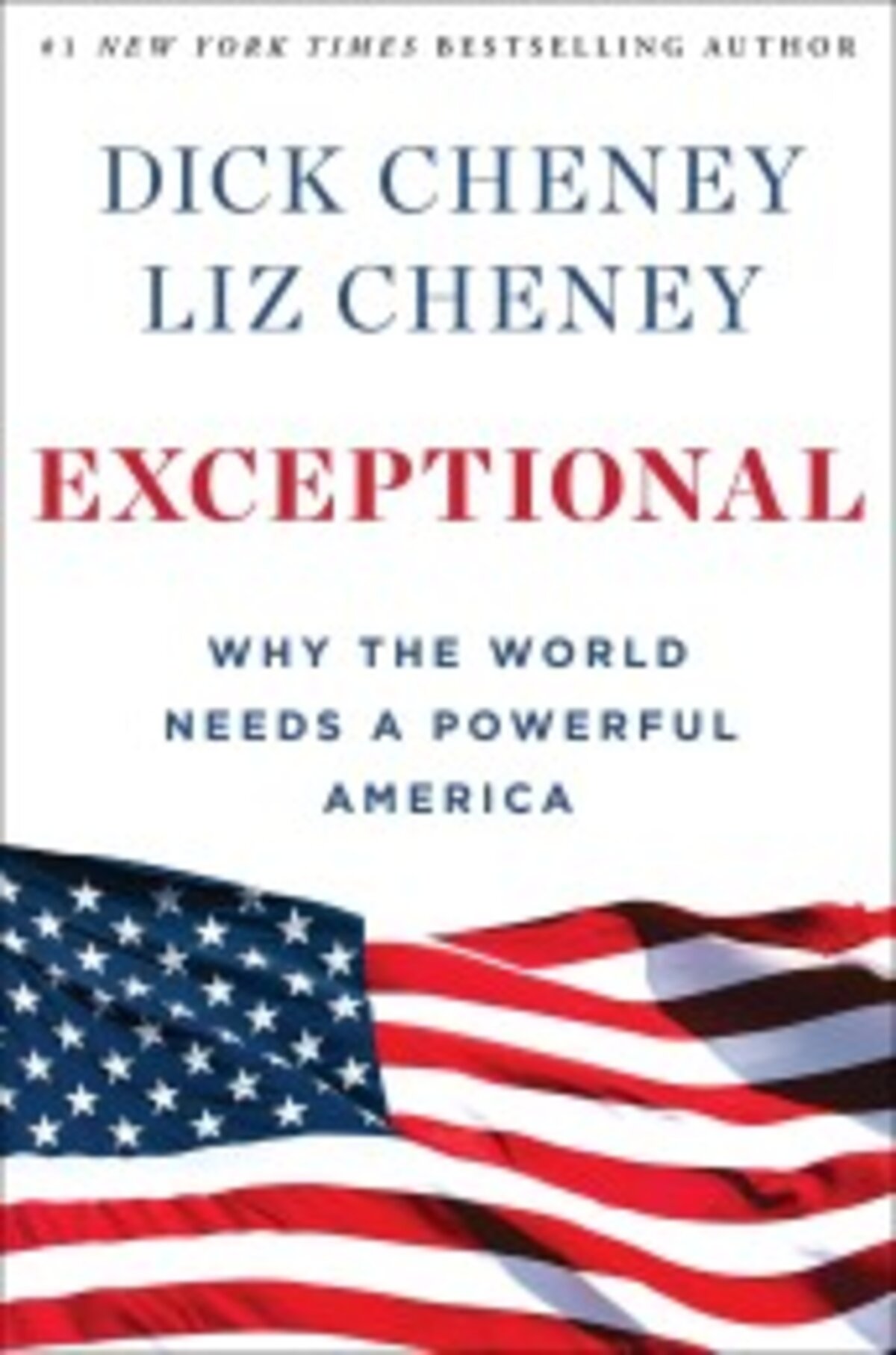
Exceptional, the new book from former Vice President Dick Cheney and his daughter, Liz, is not. It is nothing more than an unhinged rant that smacks of sedition.
“The children need to know the truth about who we are, what we’ve https://blogs.mediapart.fr/perso/contributions/blog/billets/ajouter done, and why it is uniquely America’s duty to be freedom’s defender,” the prologue proclaims. The book, however, is not about who we are but who Cheney wants us to become. It is a call for Americans to reject constitutional government and those values that have guided our nation for 227 years and replace it with imperial rule in the name of “freedom”––even when that rule includes wars of choice, intrusive violations of our privacy and civil liberties, and of course, an aggressive regime of torture.
This review assumes that Exceptional represents Dick Cheney’s ideas, and so we will refer to the author only in the singular. (To the extent the book reflects Liz’s original thinking, consider it a mind meld.)
Part One begins with Uncle Dick recounting how “the American Century” has been marked by a fight that he and a few other white-hatted cowboys have waged to keep the world safe for “freedom.” In Cheney’s telling, pro-war and wartime leaders were strong and “right,” and the others weak and feckless. World War II is reduced to: “We liberated millions and achieved the greatest victory in the history of mankind, for the good of all mankind. America––the exceptional nation––had become freedom’s defender.”
Manichean World View
In Cheney’s Manichean worldview, Truman was right to drop the atomic bomb on Japan, and Eisenhower’s farewell speech was not a warning of the growing power of the military-industrial complex as is commonly understood, but, rather, a strong endorsement of it. Reagan’s unwillingness to give up America’s right to missile defense (SDI) was “an exercise of diplomacy that should be studied by all future policy makers.” Obama’s foreign policy strategy is simply, “don’t do stupid stuff.”
Left out of Cheney’s idyllic tale of American exceptionalism in that era are such inconvenient freedom-defending events as the overthrow of the democratically elected government of Iran in 1953 and the imposition of the oppressive Shah who ruled with an iron fist until his downfall in 1978; the overthrow of the democratically elected Allende government in Chile, replaced by the military dictator, Pinochet; the Reagan administration’s support of the Contras in Central America in the 1980s; and the slavish support of African dictators like Zaire’s Mobutu Sese Seko.
Cheney conflates the Gulf War, conducted when he was George H.W. Bush’s Secretary of Defense, with the Iraq War (“We were right in 1991 and we were right in 2003.”) but without noting important differences. The Gulf War was a true coalition off the willing, with 32 nations contributing forces operating under the authority of the United Nations and very specific Security Council resolutions, and the rest of the world paying 90 percent of the war’s costs. At its conclusion, the United States was at the pinnacle of its power, which it used to advance the cause of conflict resolution in the region. By contrast, the Iraq War was essentially a United States operation to remove Saddam with limited support, no U.N. resolution, and the entire cost borne by the United States. The consequences are abundantly clear: the region is in chaos, overrun by the same brutal terrorists and radical forces that the Cheney doctrine was supposed to eliminate.
Cheney’s selective memory is again on display as he recounts the events surrounding 9/11. Absent are the infamous CIA memo of August 2001,“Bin Ladin Determined To Strike in US,” the reports of missed signals such as suspicious pilot training, and the fact that the CIA was on the highest possible alert while
Bush was cutting brush in Texas and Cheney fishing in Wyoming.
The recounting of the war on Afghanistan is rich in bravado (“we have to work the dark side”) and ultimatums (“the Taliban will turn over the terrorists or share their fate”), but poor on facts. Cheney omits the meeting at Camp David where Paul Wolfowitz kept turning the conversation from Afghanistan to Iraq; the directive Bush gave to Richard Clarke to go back and find some link between 9/11 and Saddam; and Donald Rumsfeld’s observation that there were no decent targets for bombing in Afghanistan and that we should consider bombing Iraq. There is no discussion of the pivot to Iraq just when we were on the verge of finding Bin Laden.
Absent are the infamous CIA memo of August 2001, “Bin Ladin determined to strike in US”, the reports of missed signals such as suspicious pilot training, and the fact that the CIA was on the highest possible alert while Bush was cutting brush in Texas and Cheney fishing in Wyoming.
Defending Torture
Cheney then turns to a vigorous defense of the 2003 invasion of Iraq and the torture policies he championed. Rather than share with the reader the influence he and his key staffers exerted on the decision-making process, Cheney instead recounts the statements of Democrats who voted to support the war, spreading the blame. He neglects to mention the massive propaganda operation directed by the White House or the fact that the whole case was built on lies. Other omissions: Yellowcake, aluminum tubes, mobile bioweapon labs, 9/11 attacker Atta’s supposed meeting with Iraqi intelligence officials in Prague, and intelligence conclusions cooked up in the Pentagon Office of Special Plans and foisted on Colin Powell by Cheney’s chief of staff Scooter Libby for presentation to the United Nations. Instead, “History will be the ultimate judge of our decision to liberate Iraq,” Cheney tells us, “and it is important for future decision makers that those debates be based on facts.” But only those facts he cares to share.
Smearing Obama
By the end of Part One Cheney has fully transitioned from defender of the indefensible to bare-knuckled attacker of President Obama. The Cheney snarl is on full display as he engages in an extended personal smear, complete with dog-whistle comments questioning the president’s patriotism and allegiance. The tirade is a new low, even for those of us who have personally experienced the depths to which Cheney will go to destroy an adversary. The opening paragraph of Part Two says it all: “The . . . level of self-regard was apparent, as was his underlying belief that America had played a malign role in the the world . . . . He [Obama] assessed the last fifty years of American foreign policy through the lens of Indonesia, a nation he called ‘the land of my childhood.’”
“Where some see an exceptional nation, unmatched in the history of the world in our goodness and our greatness, in our contributions to global freedom, justice and peace,” Cheney writes, “Barack Obama sees a nation with at best a ‘mixed’ record.”
Cheney combs the record for every quote and factoid that might be used to undermine the authority and legitimacy of the administration. Former senior intelligence officials are selectively quoted to criticize President Obama’s decision to end the torture program. Cheney would have us believe that
Ending programs that kept us safe, revealing the details about those programs to the terrorists, and spreading untruths about our policies was misguided, unjust, and highly irresponsible. . . . President Obama, having so consistently distorted the truth about the enhanced interrogation program and the brave Americans who carried it out, is in no position to lecture anyone about American values.
The personal attacks are unremitting and obnoxious, but they have a purpose: to whip up resentment, hatred, and every other base emotional reaction that makes civil discourse impossible. It is sedition, plain and clear.
One example is the Benghazi tragedy, where Cheney cannot resist offering his own interpretation: “At the most fundamental level it is the difference between being honest about what happened in Benghazi . . . and adopting a false narrative because it serves political purposes. It is the difference between lying to the American people and dealing with them truthfully—which is what we deserve.” The irony drips from the words.
Cheney saves his harshest attack for the Iran nuclear deal, flatly accusing the president of lying to the American people. The most comprehensive arms control deal with the most intrusive inspection regime ever negotiated, it is a deal not just between the United States and Iran but between the world and Iran, unanimously approved by the U.N. Security Council and lauded by nuclear arms specialists worldwide. To Cheney it is presidential “falsehoods.”
After concluding “In the seventy years since World War II, no American president has done more damage to our nation’s defenses than Barack Obama,” Cheney’s solution to Obama’s perfidy is simple but profoundly disturbing: return to the past failed policies. He advocates massive additional infusions of money to the Pentagon, abandonment of key agreements, further attacks on civil liberties, and imposition of an American Diktat on the rest of the world, by force of arms if necessary. It is difficult to imagine a more ill-advised approach to American national security or international relations.
Exceptional deserves to be dismissed and ignored, except that to ignore it is to risk that the subversive ideas therein actually gain some currency, if left unchallenged. They are an affront to our history, to our values, to our culture, and must be fought.
Valerie Plame is the author of Fair Game: How a Top CIA Agent Was Betrayed by Her Own Government, and two works of fiction. Joe Wilson is a retired career United States diplomat and author of The Politics of Truth: A Diplomat’s Memoir: Inside the Lies that Led to War and Betrayed My Wife’s CIA Identity. In 2003, Plame’s identity as a covert CIA officer was betrayed in retaliation for an article by her husband, Ambassador Wilson, critical of the Bush administration’s lies that led to the Iraq war. Vice President Dick Cheney’s chief of staff, I. Lewis (Scooter) Libby, was later convicted on four counts of obstruction of justice and perjury in the matter.
source :
http://www.truthdig.com/arts_culture/item/back_to_the_dark_side_dick_cheneys_pax_americana_20151026
Affaire Plame-Wilson (wikipedia)
Cheney emerges as surprise Trump surrogate
The president-elect trashed his foreign policy during the campaign, but they've found common cause in Rex Tillerson.
Agrandissement : Illustration 2
12/16/16 01:44 PM EST - By Eliana Johnson
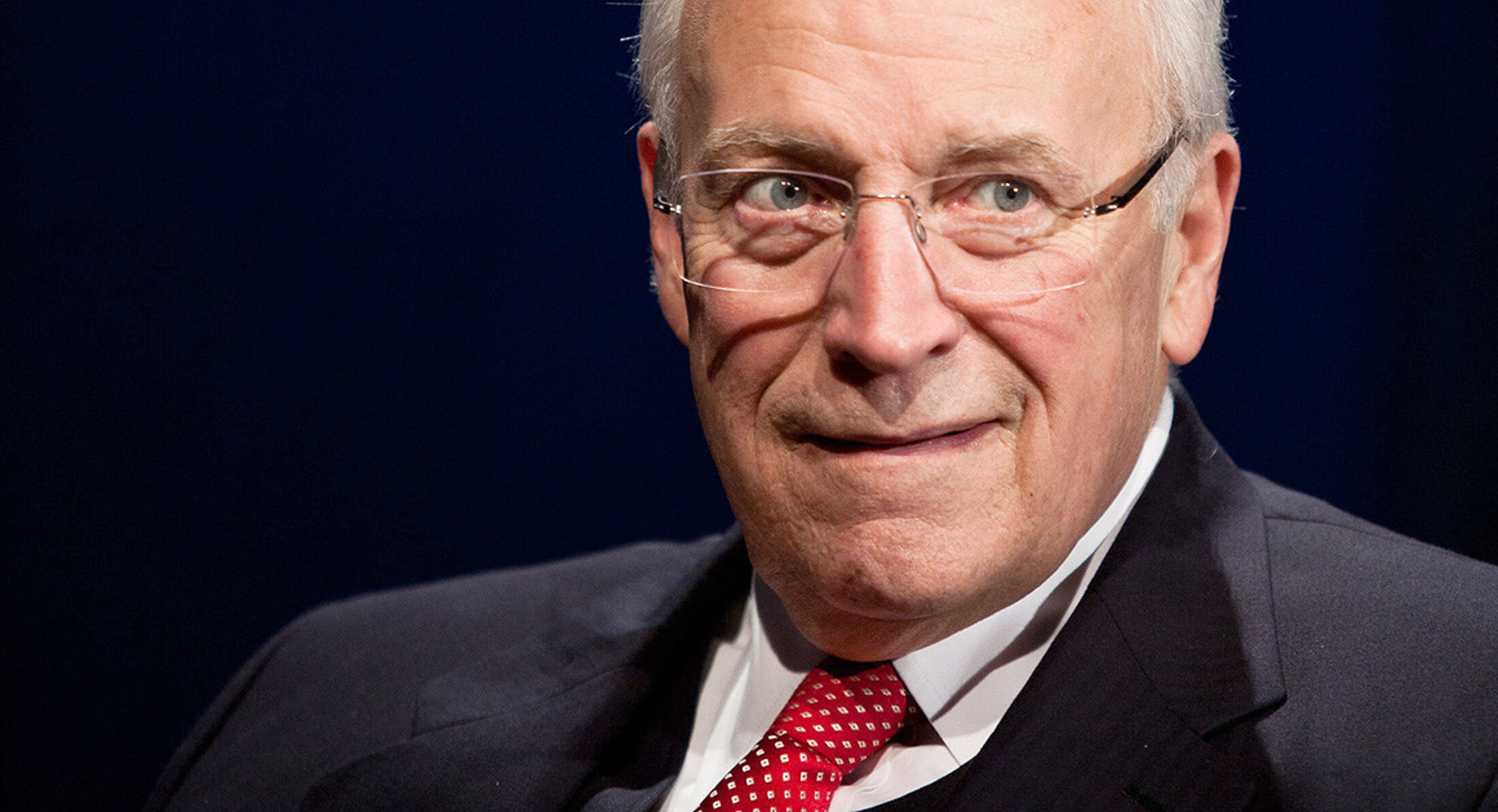
During the campaign, Donald Trump trashed the hawkish foreign policy of the second Bush White House. But now, he and his team are relying on the man most closely identified with that regime — Dick Cheney — to help ensure that Rex Tillerson is confirmed next year as Trump's secretary of state.
As Republicans have voiced reservations about Tillerson’s relationship with Russian President Vladimir Putin, Cheney — himself a former oil executive, a longtime Tillerson friend, and perhaps the country’s most famous foreign policy hawk — is serving as a bridge between the Trump team and skeptical Republican senators.
It’s a scenario no one could have possibly foreseen: that one of the key architects of the Iraq War, which Trump slammed on the campaign trail, is now being enlisted as an emissary for a man Trump wants to help steer his ship of state.
Rick Dearborn, executive director of the Trump transition and a Senate veteran who served as chief of staff to Alabama Sen. Jeff Sessions for more than a decade, is looking to leverage Cheney's influence with key GOP senators, according to a transition aide.
Another transition aide said Cheney's imprimatur may serve as "a good housekeeping seal of approval" with Republican skeptics. And indeed, Florida Sen. Marco Rubio received a call from the former vice president earlier this week. The goal: “To move Marco the right way,” according to a source familiar with the conversation. Rubio will cast a pivotal vote on the Senate Foreign Relations Committee, which must approve the nomination before it proceeds to the full Senate.
The former vice president is also in close contact with senior Trump aides. Cheney speaks frequently with the vice president-elect, Indiana Gov. Mike Pence, who himself serves as a liaison between the president-elect and Capitol Hill, and who has said he hopes to model his vice presidency on Cheney’s.
“Mike relishes the advice,” said a senior transition aide, who added that Cheney is “willing to do what he’s asked” and “wants to be helpful” to the incoming administration.” The aide denied, however, that Cheney's conversations were part of a coordinated effort between Trump Tower and Capitol Hill to push for Tillerson’s confirmation.
During the campaign, Trump accused the Bush administration of lying about the existence of weapons of mass destruction to embroil the country in the Iraq War. He argued that the move to topple Saddam Hussein “may have been the worst decision” in presidential history.
Cheney was a grudging supporter of the Republican nominee: He spoke out against Trump’s proposed ban on Muslim immigration and did not attend the Republican convention in Cleveland, and told associates privately that he was backing Trump in large measure to help his daughter Liz, who was a Republican candidate for Congress.
Cheney’s involvement in Tillerson’s selection and nomination is surprising for a candidate who railed against the Republican establishment on the campaign trail and was elected to office because of that posture. Yet his reliance on some of the marquee names in the GOP for advice and counsel as he fills his Cabinet also marks the beginning of his integration into the Republican establishment as he prepares to move to Washington ahead of his inauguration next month.
Cheney’s words carry weight with the Republican hawks most skeptical of Trump’s quasi-isolationist view of the world. Rubio’s vote is a particular concern because the foreign relations panel is tightly divided between Republicans and Democrats — 10 Republicans, 9 Democrats — so one GOP defection could imperil the nomination. The Florida senator said Saturday that he does not want to see a “friend of Vladimir” at the State Department, a reference to an award of friendship the Kremlin bestowed on Tillerson in 2013.
“I think the pitch Cheney should make is that the Senate has traditionally supported the president’s Cabinet nominees,” said a former GOP Senate aide.
Cheney came into the George W. Bush administration having served as chief of staff to Gerald Ford in the wake of the Watergate scandal and seen Congress slowly chip away at the power of the executive. The former VP believes presidents should have wide latitude in selecting Cabinet nominees.
That view is likely to square with Trump’s expansive understanding of executive power. It also helps that Cabinet nominations have rarely been rejected by the Senate — it happened only three times in the 20th century.
It may also mark the beginning of a reconciliation of sorts between Trump and the establishment figures he positioned himself against during the campaign. In addition to Cheney, several prominent officials from both Bush administrations are publicly vouching for Tillerson, including former Secretary of State Condoleezza Rice, former Defense Secretary Robert Gates and former Secretary of State James Baker.
“Invariably, the people that know the nominees and have worked with them join hands and work to make sure they are confirmed,” said Spencer Abraham, the former Michigan senator who led the Bush administration’s Department of Energy.
Still, back at Trump Tower there are indications the integration is a work in progress. Indeed, the president-elect and his aides consider some Republican lawmakers’ initial aversion to Tillerson a symptom of the establishment’s fecklessness.
“Lawmakers are overall the reason we have the problems that we have, because they think that they’re the smartest people in the world and they sit in D.C. and talk to themselves, and if you don’t sit on the cocktail circuit there you don’t know anything about anything,” said a senior transition aide. “I think they’re intimidated by a guy like this — they don’t know him and he doesn’t owe them anything.”
CORRECTION: An earlier version of this story misstated James Baker's former position.
source :
http://www.politico.com/story/2016/12/dick-cheney-trump-surrogate-232746
voir aussi :
Trump nomme Tillerson : prémices d'une contre-révolution énergétique mondiale ?
16 déc. 2016 - Par Maxime Combes - Blog : Sortons de l'âge des fossiles !